

Content
Seventy-three minutes into the 2022 World Cup final, Argentina were leading France 2-0 and the live odds on France had blown out to 21.00. Within 97 seconds, Mbappé scored twice to make it 2-2, and those 21.00 odds collapsed to 2.80. That is live betting in its purest form — a market that reprices every few seconds based on what is happening on the pitch, offering opportunities that pre-match odds cannot touch. The 2026 World Cup will feature 104 matches across 39 days, and for NZ punters watching from NZST afternoon slots, the in-play markets will be the most dynamic betting arena available.
How Live Betting Works
When I placed my first live bet in 2015 — a halftime punt on a nil-nil Champions League match going over 1.5 goals — I did not understand that the odds I saw and the odds I got were often different numbers. That gap, called latency, is the single most important concept in live betting, and it catches new punters off guard constantly.
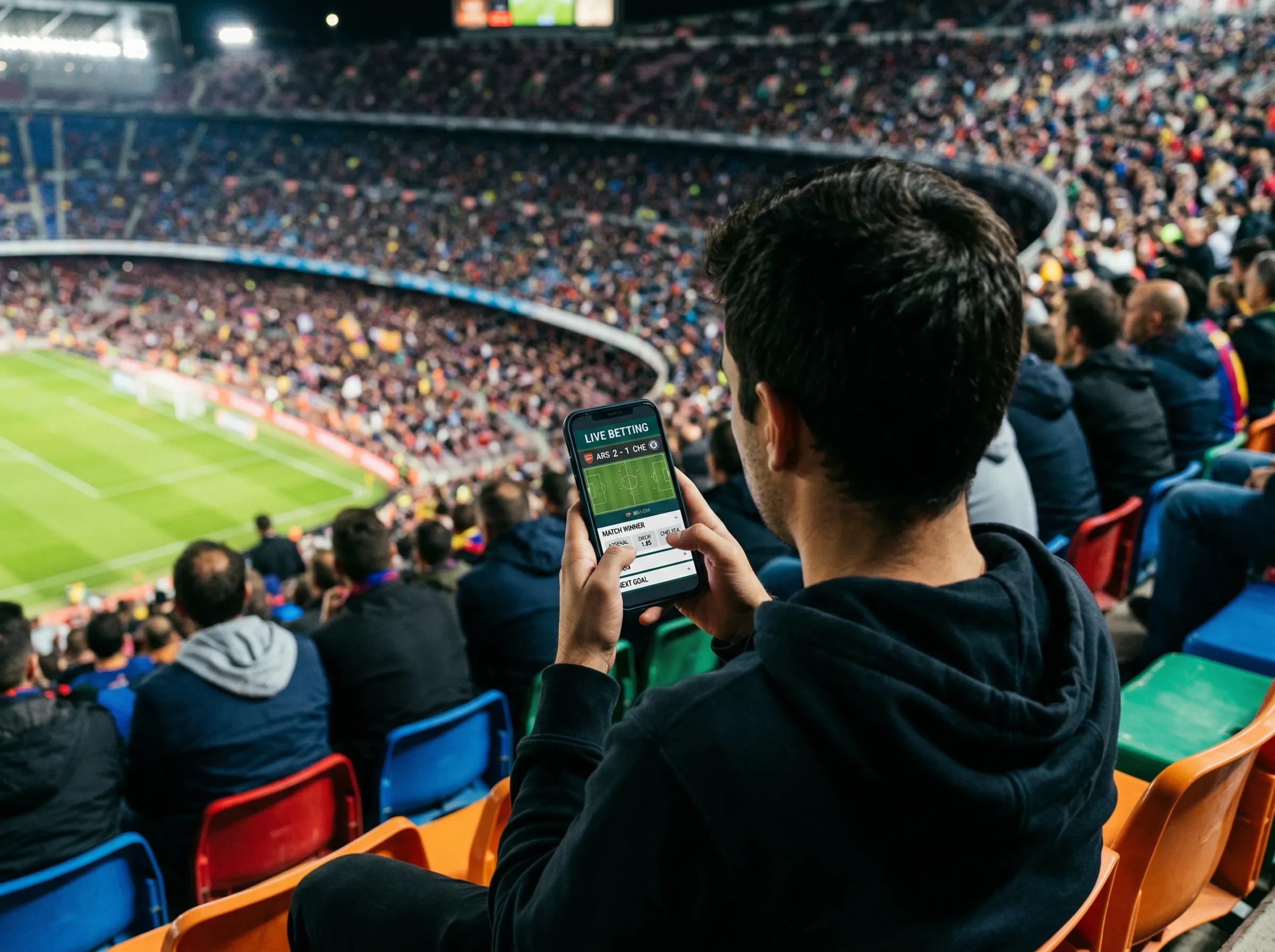
Live betting (also called in-play betting) allows you to place bets while a match is in progress. The bookmaker's algorithm recalculates odds in real time based on the score, time elapsed, possession, shots, corners, red cards and other match data. On TAB NZ, live markets are available for most major football fixtures, and the World Cup will carry the full suite: 1X2, next goal, over/under totals, both teams to score, correct score, and player props.
The mechanics differ from pre-match betting in three critical ways. First, odds change constantly — a price you see at the 55th minute may be gone by the 56th. TAB NZ uses a "bet acceptance" model where your bet is submitted at the displayed price and confirmed (or rejected) within seconds. If the odds have moved unfavourably before your bet is processed, the system may offer you the new price or reject the bet outright. Second, markets suspend during key events — goals, red cards, penalties, VAR reviews. You cannot bet during these moments, which is when the odds shift most dramatically. Third, the bookmaker's margin is typically higher on live markets than pre-match markets, because the operator assumes more risk from rapid price changes and information asymmetry.
For a match like Iran vs New Zealand on 16 June, live betting adds a dimension that pre-match odds cannot capture. If the All Whites go into halftime at 0-0 — a plausible scenario given Iran's defensive approach — the live odds on New Zealand to win will shorten compared to their pre-match price, because the draw at half time means one goal could decide the match. Conversely, if Iran score early, New Zealand's live odds will lengthen sharply, creating a potential value entry point if you believe the All Whites can come back.
Best In-Play Markets for the World Cup
Not all live markets are created equal. Some are sharp, efficient and hard to beat. Others are soft, slow to adjust, and offer genuine edges for punters who read the match well. After covering four World Cup cycles, I have a clear hierarchy of which in-play markets offer the most actionable opportunities — and which ones to avoid.
Next goal is the market I bet most frequently during live matches. It offers three outcomes — team A scores next, team B scores next, or no more goals — and the pricing adjusts based on match flow rather than just the scoreline. If a team is dominating possession, creating chances and hitting the woodwork, the next goal odds will shorten for them — but often not quickly enough. The algorithm lags behind what your eyes tell you, especially in the early stages of a dominant spell. During the group stage, where teams often open cautiously and then push for goals after the 60th minute, the next goal market between the 55th and 70th minute is where I find the most consistent edges.
Over/under totals shift significantly during a match, and the live line moves from 2.5 pre-match to 1.5 or 0.5 as goals are scored. The key principle: the live totals market tends to overreact to early goals and underreact to late pressure. A match that sees a goal in the first 15 minutes will often have the over 2.5 line priced too short — the market assumes the pace will continue, when in reality many group stage matches settle down after an early goal. Conversely, a match at 0-0 in the 70th minute will have the over 0.5 goals line at surprisingly generous odds, even though late goals at the World Cup are common — 31% of all 2022 World Cup goals were scored after the 70th minute.
Correct score is the market I avoid in-play. The bookmaker's margin on correct score is the highest of any football market — often 25–30% overround — and the live version adds latency risk on top. The payouts look attractive (a 2-1 scoreline at the 70th minute might be 5.00 or 6.00) but the edge is almost always negative after accounting for margin. Unless you have a very specific, data-driven reason to back a particular scoreline — and you almost never do — correct score is a trap.
Combine live bets with World Cup multi bets for bigger payouts.
| Live Market | Edge Potential | Best Timing Window | Margin Level |
|---|---|---|---|
| Next goal | High | 55th–70th minute | Medium (12–15%) |
| Over/under totals | Medium-High | After early goal or 0-0 at 65th+ | Medium (10–13%) |
| 1X2 (match result) | Medium | After a goal changes the complexion | Low-Medium (8–12%) |
| BTTS | Medium | When one team has scored and the other is pressing | Medium (10–14%) |
| Correct score | Low | Avoid — margin too high | High (25–30%) |
When to Place Your Live Bet — Timing Patterns
I track live odds across dozens of matches each tournament, and the data reveals clear timing patterns that most punters never notice. The bookmaker's algorithm is sophisticated but not perfect, and it consistently misprices certain match phases because it weights recent events too heavily — a phenomenon borrowed from behavioural economics called recency bias.
The first window opens between the 20th and 30th minute. By this point, the match has settled into a shape — you can see which team controls possession, which side is sitting deep, whether the pressing triggers are working. But the live odds often still reflect pre-match expectations rather than the actual match dynamics. If a team that was priced as the underdog is competing strongly, their live odds will be shorter than pre-match but not short enough to reflect the reality you are watching. This is the window for backing underdogs who are performing above the market's expectation.
The second window is halftime. During the 15-minute break, the algorithm resets partially, but it does not account for tactical adjustments. If a manager makes a substitution or formation change at halftime — which happens in roughly 35% of World Cup group stage matches — the impact of that change will not be reflected in the odds for the first five to ten minutes of the second half. I often wait until the 50th minute, observe the tactical shift, and then enter the market before the algorithm catches up.
The third and most profitable window is the 70th–80th minute zone. At this stage, trailing teams push forward aggressively, substitutions have changed the match rhythm, and tired legs create space. Goals are disproportionately common — 31% of 2022 World Cup goals, as mentioned above, came after the 70th minute. The next goal market at this stage is my single most profitable live betting window across four tournament cycles. The algorithm prices the probability of "no more goals" too highly in this window because it extrapolates from the tempo of the previous 20 minutes, which was often a slower, mid-game phase.
One timing trap to avoid: the first five minutes of a match. Odds are volatile, the market is thin, and latency is highest because the algorithm is calibrating to the opening pace. Placing a live bet in the first five minutes is essentially gambling on the algorithm's initial calibration — there is no informational edge, just noise. Wait, watch, and let the match develop before you commit money.
Live Betting via TAB NZ
Since 28 June 2025, TAB NZ holds the exclusive monopoly on sports betting in New Zealand — online and offline. That means every live bet you place on the World Cup will go through the TAB NZ platform, and understanding its specific in-play features is essential for getting the most out of the tournament.
TAB NZ offers live betting on football via its app and website. The interface displays real-time odds for available markets, with the standard World Cup suite: 1X2, next goal, totals, BTTS and selected player props. Markets suspend automatically during goals, red cards and VAR reviews — a standard practice across regulated bookmakers. Bet acceptance uses a "price at time of acceptance" model, meaning the odds you see when you click "place bet" may not be the final odds confirmed. If the price moves against you by more than a small threshold before acceptance, the bet will either be rejected or offered at the new price. This is standard practice and not specific to TAB NZ, but it is worth understanding because it affects your live betting rhythm — you need to be decisive and accept that some bets will be rejected during fast-moving markets.
Cash-out functionality is available on selected live markets through TAB NZ. Cash-out allows you to settle a bet before the match ends, locking in a profit (if your bet is winning) or limiting a loss (if it is losing). The cash-out price is calculated by the bookmaker and typically includes a margin, so you will receive less than the theoretical fair value. I use cash-out sparingly — maybe once or twice per tournament — and only when the match situation has changed so dramatically that my original thesis is no longer valid. Cashing out routinely erodes your long-term return because the margin on each cash-out compounds.
For NZ punters, the practical advantage of World Cup live betting is the schedule. All Whites matches kick off at 1 PM or 3 PM NZT — afternoon slots that allow you to watch the match, assess the flow, and place live bets without the sleep deprivation that European club football demands. The group stage runs from 12 to 26 June, with three or four matches per day starting from early morning NZT (some 5 AM kickoffs for the earliest matches) through to the afternoon slots. I recommend targeting the 1 PM and 3 PM NZT matches for live betting, where your attention is sharpest and the match flow is easiest to read in real time. The comprehensive World Cup betting guide covers the broader legal and strategic context for NZ punters across all market types, including in-play.
Live Discipline — The Rules That Save Your Bankroll
The biggest risk in live betting is not picking the wrong side — it is betting too often. The constant stream of updated odds, the adrenaline of a match in progress, and the ease of tapping "place bet" on your phone create a dangerous loop. I have seen punters burn through their entire tournament budget in a single matchday of live betting, placing 15 or 20 bets across three matches because the odds "felt right" in the moment.
My rule is simple: one live bet per match, maximum. If the opportunity does not present itself, I do not force it. A nil-nil match with no clear momentum shift does not require a live bet — sometimes the best play is no play. This discipline is harder to maintain during the World Cup than during a regular league weekend, because the emotional investment is higher and the stakes feel larger. But the maths do not change because the tournament is more exciting.
Set a live betting budget that is separate from your pre-match bets. I allocate roughly 30% of my World Cup budget to live betting and 70% to pre-match selections, because pre-match odds carry lower margins and allow more time for analysis. Within the live budget, I cap each individual bet at 5% of the live allocation — so if the live budget is $100, no single bet exceeds $5. This prevents the catastrophic scenario where a "sure thing" live bet at the 85th minute wipes out a week's worth of careful selections. Check the latest live odds at nzsoccerwc.
Finally, never chase a loss in-play. If your pre-match bet on Belgium to beat Iran is losing at halftime and you place a live bet on Belgium to win the second half to "recover" the loss, you have doubled your exposure to the same outcome. That is not strategy — it is compounding risk. Accept the loss, wait for the next match, and let the tournament unfold across 104 fixtures rather than trying to fix everything in a single live market.[faq] [id="1" title="Does TAB NZ offer live betting on World Cup 2026 matches?" desc="Yes. TAB NZ provides in-play betting on football matches including the World Cup. Available live markets typically include match result (1X2), next goal, over/under totals and both teams to score. Markets suspend automatically during goals, red cards and VAR reviews."] [id="2" title="When is the best time to place a live bet during a World Cup match?" desc="The most profitable window across recent World Cup data is between the 70th and 80th minute, when trailing teams push forward and goals are disproportionately common. The halftime reset (around the 50th minute) and the 20th-30th minute window for backing competitive underdogs also offer consistent edges."] [id="3" title="How much of my World Cup budget should I allocate to live betting?" desc="A reasonable split is 70% pre-match and 30% live betting. Pre-match odds carry lower bookmaker margins and allow more analysis time. Within the live allocation, capping individual bets at 5% of the live budget prevents outsized losses from single in-play decisions."] [/faq]
