

Content
- How New Zealand Qualified — Historic OFC Ticket
- Squad and Key Players
- Rivals Breakdown — Belgium, Egypt, Iran
- Group G Matches — Dates, Kickoff Times (NZT), Venues
- All Whites Odds — Group and Match Markets
- Tactical Approach and Formation
- New Zealand at the World Cup — 2010 and Beyond
- The Verdict on the All Whites
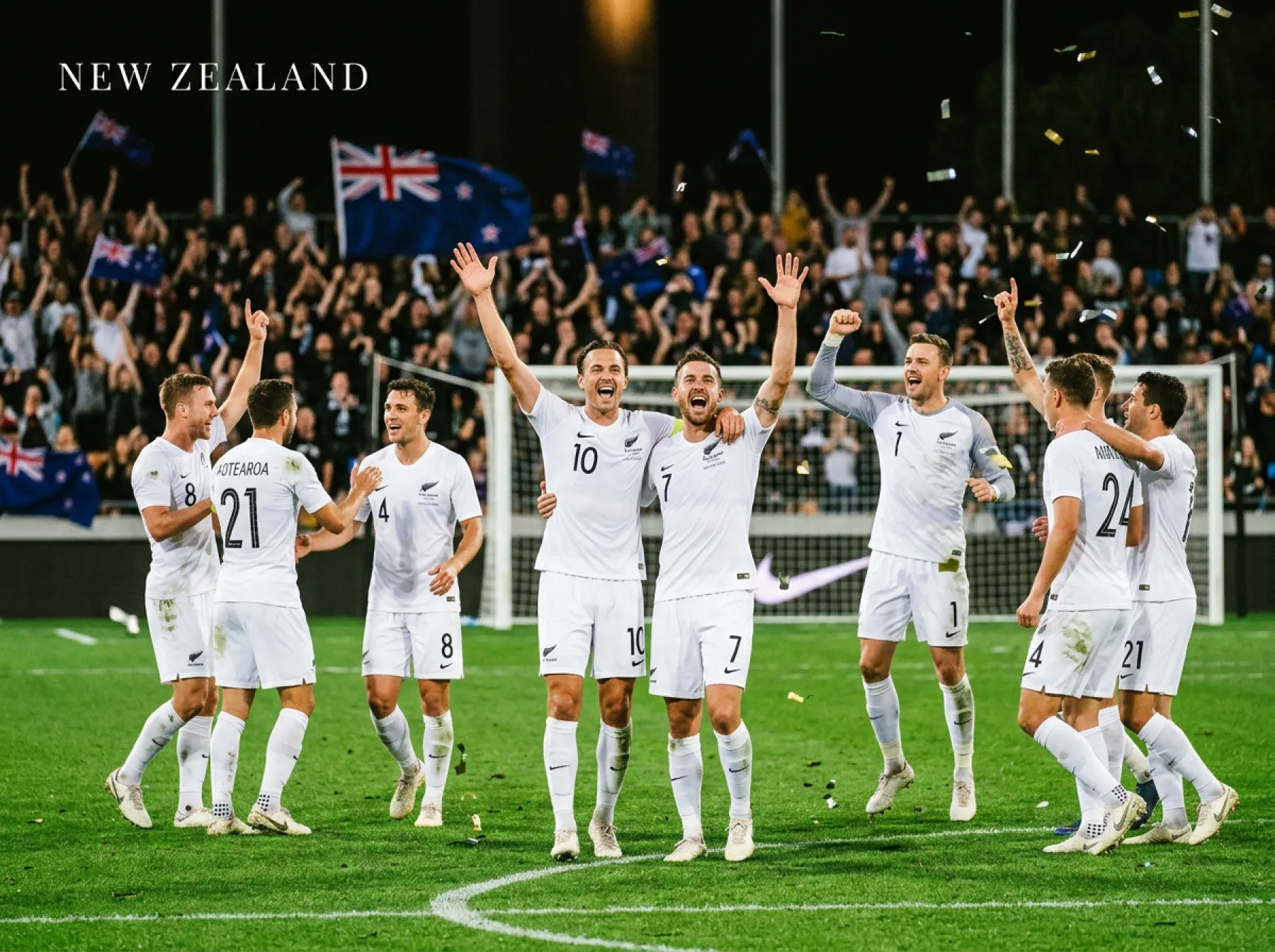
Sixteen years between World Cup appearances would test the patience of any footballing nation, but for New Zealand the wait carried a sharper edge. The All Whites returned from South Africa in 2010 unbeaten — that famous 1-1 draw against Italy still ranks among the great World Cup upsets — yet spent the next decade and a half watching from the outside. That drought ended on 24 March 2025, when New Zealand secured a direct OFC berth for the 2026 tournament. No intercontinental playoff, no heart-stopping penalty shootout against a CONMEBOL side. A straight ticket. I have covered nine World Cup cycles, and this is the first time OFC earned an automatic slot. For Kiwi punters, the implications are enormous: the All Whites are in Group G alongside Belgium, Egypt and Iran, with every group match kicking off at a civilised afternoon hour in New Zealand. This page breaks down squad depth, odds, tactical setup and realistic betting angles for the only team that truly matters to a NZ audience.
How New Zealand Qualified — Historic OFC Ticket
For decades the OFC qualification pathway felt like a cruel joke. Win every match in your confederation, then face a two-legged intercontinental playoff against a team from South America or Asia — nations with vastly deeper player pools and infrastructure budgets. The All Whites navigated that gauntlet in 2009 by beating Bahrain over two legs, but the path was never guaranteed, and in 2017 Peru ended New Zealand's hopes in the intercontinental round. The expansion to 48 teams changed everything. FIFA awarded OFC a direct qualifying spot, meaning the confederation champion books a flight to the World Cup without an extra hurdle. New Zealand dominated the OFC qualifying rounds, winning every match across both stages without conceding more than one goal in any fixture. The campaign peaked with a 3-0 victory over Solomon Islands in the final qualifier in Auckland on 24 March 2025.
That result confirmed New Zealand as the first team to secure an automatic OFC World Cup berth. The squad celebrated on the pitch at Eden Park while a sellout crowd of 48,000 — a record for a football match in New Zealand — sang the anthem for a second time. Head coach Darren Bazeley, who took charge in early 2024, built the campaign around defensive solidity and quick transitions. New Zealand conceded just four goals across ten qualifying matches, a record that gave bookmakers an early signal: this is not a squad content to simply participate.
The qualifying run also showcased emerging depth. Where previous All Whites squads relied on one or two European-based professionals supported by semi-professional domestic players, the 2025 group featured eleven players contracted to clubs in the English Championship, Scottish Premiership, A-League and J-League. That spread of competitive experience matters when the opposition jumps from Solomon Islands to Belgium in the space of fourteen months.
Squad and Key Players
I track roughly 400 squads across confederations every cycle, and the 2026 All Whites are the most interesting New Zealand group I have seen. Not the most talented in absolute terms — nobody is confusing this roster with France — but the deepest and most tactically coherent NZ squad since the 2010 vintage. The final 26-man selection will not be confirmed until late May 2026, but the core is settled.
Chris Wood remains the talisman. At 34, the Nottingham Forest striker brings Premier League aerial presence, movement in the box and a nose for scrappy goals that tournament football rewards. Wood scored 28 goals in 79 international appearances heading into 2026, and his hold-up play will be critical against physically imposing defences like Iran and Belgium. He will not press from the front for 90 minutes, but when the All Whites win the ball in transition, Wood converts half-chances at an elite rate.
Behind Wood, the creative burden falls on Matt Garbett, who established himself in Serie A with Torino before a loan spell at Fiorentina in the 2025-26 season. Garbett operates as the advanced midfielder — comfortable receiving between lines, capable of driving runs, and the only All White who routinely plays against Champions League-level opposition at club level. Sarpreet Singh, now at a Bundesliga 2 club after spells in the Swiss Super League, adds another option on the left side of midfield, offering set-piece delivery and dribbling from wide areas.
The defensive spine centres on Liberato Cacace, the Bologna left-back who brings Serie A discipline to the backline. At 23, Cacace is the youngest confirmed starter and one of the few All Whites who has played regularly in a top-five European league across two consecutive seasons. Alongside him, captain Michael Boxall (Minnesota United, MLS) organises the centre-back pairing — experienced, vocal, and familiar with North American conditions, which helps for a World Cup staged in the US and Canada. The goalkeeping position belongs to Stefan Marinovic unless form or injury intervene; his 61 caps represent the most among active NZ keepers.
Depth is the concern. If Wood picks up an injury, the drop-off in attacking output is severe. Ben Waine (Plymouth Argyle, English Championship) offers pace and willingness but lacks Wood's aerial game. Midfield alternatives like Elijah Just and Clayton Lewis provide energy without Garbett's technical ceiling. The bench will not win matches — the starting eleven needs to stay fit across three group games in eleven days. Set-piece delivery is another area to watch: Singh and Garbett share dead-ball duties, and against physical sides like Iran and Belgium, corners and free kicks may generate the best scoring opportunities. Wood's aerial prowess makes him a genuine threat from any delivery into the box, and Bazeley's staff have reportedly devoted significant training time to set-piece routines designed specifically for tournament football.
Rivals Breakdown — Belgium, Egypt, Iran
Group G landed somewhere between manageable and daunting for the All Whites. Belgium are clear favourites, Egypt bring tournament pedigree and a generational star, and Iran present the kind of organised, physical challenge that has tripped up bigger nations at previous World Cups. The good news for NZ punters: there is no second heavyweight. This is not a group of death. It is a group where third place — and potentially a Round of 32 spot as one of the eight best third-placed teams — is a realistic target. See how Australia at World Cup 2026 are placed in Group D.
Belgium enter the tournament as a side in transition. The golden generation that finished third in 2018 has largely moved on, but Kevin De Bruyne remains, and the attacking depth around Jérémy Doku and Charles De Ketelaere means Belgium can hurt any defence. Their qualification through UEFA was comfortable, and outright group winner odds sit around 1.40 across most markets. Belgium will likely rotate across the three matches, which creates potential value in match betting for opponents who catch them underprepared.
Egypt present the most dangerous rival for the All Whites' third-place ambitions. Mo Salah, at 34, may be playing his final World Cup, and that narrative alone generates pressure and motivation. Egypt's African Cup of Nations campaigns demonstrate their ability to grind results in tournament football — low-block defending, clinical counter-attacks, and collective discipline. The Egypt squad features several players from the Saudi Pro League and Egyptian Premier League alongside Salah, giving them a blend of star power and functional depth. Beating Egypt in the head-to-head is the single most important result for New Zealand's campaign.
Iran are the opponents the All Whites know least about from a playing perspective, but the data tells a clear story. Team Melli qualified comfortably through AFC, conceding fewer goals per match than any other Asian qualifier. They defend deep, press selectively, and rely on set pieces and transition moments. Iran's World Cup record includes surprise results against Morocco (2018) and a near-miss against Portugal in the same tournament. For NZ punters, the opening match — Iran vs New Zealand on 16 June at SoFi Stadium — is the fixture that defines the entire campaign. A draw keeps the All Whites alive; a win opens the door to the knockout round.
Group G Matches — Dates, Kickoff Times (NZT), Venues
Every All Whites match at this World Cup takes place on the west coast of North America, which is the best possible outcome for Kiwi viewers and punters. The time difference between Pacific Time and NZST means afternoon kickoffs in New Zealand — no 3 AM alarm clocks required. Here is the complete Group G schedule converted to New Zealand Standard Time.
| Date (NZT) | Time (NZT) | Match | Venue |
|---|---|---|---|
| 16 June | 7:00 AM | Belgium vs Egypt | Lumen Field, Seattle |
| 16 June | 1:00 PM | Iran vs New Zealand | SoFi Stadium, Los Angeles |
| 22 June | 7:00 AM | Belgium vs Iran | SoFi Stadium, Los Angeles |
| 22 June | 1:00 PM | New Zealand vs Egypt | BC Place, Vancouver |
| 27 June | 3:00 PM | New Zealand vs Belgium | BC Place, Vancouver |
| 27 June | 3:00 PM | Egypt vs Iran | Lumen Field, Seattle |
The matchday one fixture on 16 June at 1:00 PM NZT is ideal for watch parties — a Monday afternoon slot that falls within lunch breaks and after-school hours. Matchday two against Egypt on 22 June at 1:00 PM NZT is another prime slot. The final group game against Belgium on 27 June kicks off at 3:00 PM NZT, played simultaneously with Egypt vs Iran — a scheduling feature introduced by FIFA to prevent collusion in the last round. Punters placing live bets during that final matchday will need to monitor two matches simultaneously, as results in one directly affect qualification scenarios in the other.
Vancouver's BC Place hosts two of the three All Whites matches. The retractable-roof stadium seats 54,500 for football configuration and offers controlled conditions regardless of weather. SoFi Stadium in Inglewood (greater Los Angeles area) hosts the opener against Iran, seating 70,240 under a translucent roof. Both venues feature modern playing surfaces that suit New Zealand's passing-based approach under Bazeley.
All Whites Odds — Group and Match Markets
The opening odds tell a blunt story, but there are angles worth exploring if you know where to look. New Zealand are priced as the longest shot in Group G across every major market, which is expected for an OFC qualifier facing two UEFA and one CAF/AFC opponent. The question is not whether the All Whites are underdogs — they are — but whether the margin between pricing and actual probability creates value.
| Market | Belgium | Egypt | Iran | New Zealand |
|---|---|---|---|---|
| Group G winner | 1.40 | 4.50 | 6.00 | 21.00 |
| To qualify (top 2) | 1.12 | 2.10 | 3.00 | 8.50 |
| To qualify (incl. best 3rd) | 1.05 | 1.55 | 2.20 | 5.00 |
The "to qualify including best third" market at 5.00 is where I see the most interesting angle for NZ punters. The new 48-team format sends eight of twelve third-placed teams to the Round of 32. That means New Zealand does not need to finish in the top two — a single win and a draw across three matches could generate enough points. Four points from a group where Belgium will beat most opponents anyway is not outlandish. If Belgium take six points from Egypt and Iran, the other three teams fight over the remaining results. A draw against Iran plus a competitive showing against Egypt could be enough.
Match betting offers sharper lines. Iran vs New Zealand on matchday one is priced roughly at Iran 2.30, Draw 3.10, New Zealand 3.40. The draw at 3.10 represents fair value if you believe Bazeley will set up conservatively in the opener — and every piece of evidence from the OFC qualifiers suggests he will. New Zealand conceded four goals in ten qualifiers by sitting deep and absorbing pressure before hitting on transition. Against Iran, who play a similar style, the match profile screams low-scoring draw.
The New Zealand vs Egypt match on 22 June carries odds of approximately Egypt 1.85, Draw 3.30, New Zealand 4.80. Egypt are rightly favoured, but 4.80 for an All Whites win in a match both teams will treat as a must-win is generous. If New Zealand draw with Iran in the opener and Egypt lose to Belgium (highly probable), the Egypt match becomes a direct shootout for third place. Desperation games produce upsets, and 4.80 reflects that possibility.
Tactical Approach and Formation
Darren Bazeley does not chase possession. His New Zealand side conceded just 38% average possession during qualifying — the second-lowest figure among all 48 World Cup qualifiers — yet maintained the best defensive record in OFC. That is not a coincidence. Bazeley's system is built on a compact 5-4-1 defensive shape that transitions to a 3-4-3 in attack, with wing-backs pushing high and the two central midfielders splitting between holding and advancing roles.
The five-at-the-back structure suits World Cup football for underdogs. Three centre-backs provide cover against quick attackers (essential against Doku and Salah), while wing-backs offer width without committing full-backs forward. Cacace on the left operates as an auxiliary winger in transition, and his Serie A experience means he can handle the positional demands of switching between defensive and offensive phases multiple times per match. On the right, the wing-back role is more conservative — likely Dane Ingham or a similarly defensive-minded option.
In possession, Wood drops deep to receive and hold the ball, allowing Garbett and the wide midfielders to run beyond. The passing sequences are short and direct — New Zealand averaged just 4.2 passes per attacking sequence in qualifying, compared to 7.8 for Belgium. This is not a tiki-taka side. It is a counter-attacking unit that defends with numbers and strikes with speed. For betting purposes, this profile suggests under 2.5 goals in all three group matches. The All Whites' matches are likely to be tight, scrappy and decided by single goals or set pieces.
New Zealand at the World Cup — 2010 and Beyond
The 2010 World Cup in South Africa remains the emotional foundation for everything the All Whites do on the global stage. Three group matches, three draws, zero defeats — New Zealand went home as the only unbeaten team in the tournament alongside eventual champions Spain. The 1-1 draw against Italy on 20 June 2010 in Nelspruit is the defining moment of New Zealand football history: Winston Reid's header in the second half drew level against the reigning world champions, and the All Whites held on through nine minutes of stoppage time.
That result carries weight beyond nostalgia. It demonstrated that New Zealand can compete against elite opposition when the tactical setup is right and the squad commits fully to a defensive system. Ricki Herbert's 2010 team played a 4-5-1 low block — not dissimilar to Bazeley's current approach — and frustrated Italy, Paraguay and Slovakia into matches decided by fine margins. The lesson for 2026 is clear: respect the All Whites' defensive organisation. They will not crumble 4-0 against Belgium. They will make every opponent work for every goal.
New Zealand's only other World Cup appearance was in 1982 in Spain, where the side lost all three group games and conceded twelve goals. The gulf between 1982 and 2010 reflected three decades of professional development and the emergence of players in European leagues. The gap between 2010 and 2026 represents another evolutionary step — more New Zealand-born players in higher-quality leagues, better coaching infrastructure through New Zealand Football's academy system, and a level of tactical sophistication that was absent even fifteen years ago.
The Verdict on the All Whites
New Zealand are not going to win the World Cup. I need to say that plainly because the excitement around this squad is real, and Kiwi punters deserve an honest assessment alongside the optimism. The All Whites are ranked 95th in the world. They face three opponents ranked between 6th and 35th. The talent gap is significant. But tournaments are not decided by rankings alone, and the Group G draw gave New Zealand a realistic path to the Round of 32. Check all All Whites odds at nzsoccerwc.
The betting case for the All Whites rests on three pillars: a defensive system that limits opponents to few clear chances, favourable scheduling that avoids fatigue-inducing time zones, and match-specific value in the draw and under markets. A draw against Iran at 3.10, under 2.5 goals in all three matches, and the "to qualify including best 3rd" market at 5.00 are the lines I keep coming back to. New Zealand at the World Cup is a story worth following — and a set of markets worth watching closely from the moment the squad lands in Los Angeles.[faq] [id="1" title="Can New Zealand qualify from Group G at the 2026 World Cup?" desc="New Zealand face a tough but not impossible task. The 48-team format means eight of twelve third-placed teams advance to the Round of 32. If the All Whites pick up four points from their three group matches — realistically a win against Iran and a draw elsewhere — they have a genuine chance of progressing as one of the best third-placed sides."] [id="2" title="What time do All Whites matches kick off in New Zealand?" desc="All three Group G matches involving New Zealand fall in the afternoon NZT window. Iran vs New Zealand kicks off at 1:00 PM NZT on 16 June, New Zealand vs Egypt at 1:00 PM NZT on 22 June, and New Zealand vs Belgium at 3:00 PM NZT on 27 June. No early morning starts required."] [id="3" title="Where can I legally bet on All Whites World Cup matches in New Zealand?" desc="TAB NZ is the only legal sports betting operator in New Zealand following the Racing Industry Act 2020 amendments. TAB NZ offers fixed odds, tote betting and live in-play markets on all World Cup matches including All Whites fixtures. Offshore bookmakers are not licensed to accept bets from NZ residents."] [id="4" title="Who are New Zealand's key players at the 2026 World Cup?" desc="Chris Wood (Nottingham Forest) leads the attack as the primary goal threat with over 28 international goals. Matt Garbett (Serie A) provides creativity from midfield, Liberato Cacace (Bologna) anchors the left side of defence, and captain Michael Boxall organises the backline. Goalkeeper Stefan Marinovic holds 61 caps."] [/faq]
