

Content
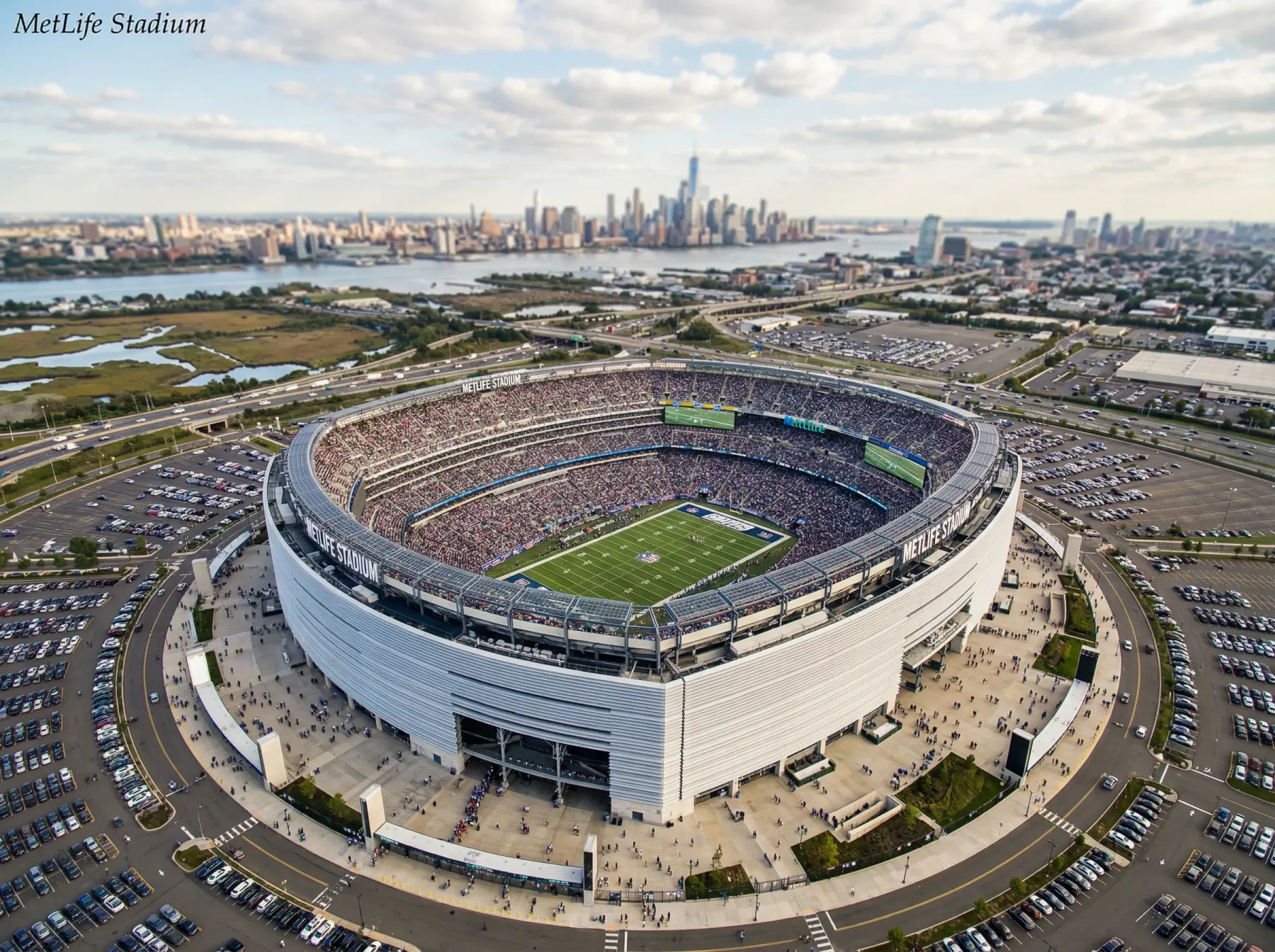
On 19 July 2026, someone will lift the World Cup trophy at MetLife Stadium in East Rutherford, New Jersey, and 82,500 people will witness the moment that defines football's biggest tournament. I have attended matches at most major European venues and a handful of American stadiums, and MetLife occupies a specific place in the hierarchy: it is built for spectacle. The open-bowl design, the Manhattan skyline visible from the upper tiers on clear days, and the sheer scale of an NFL-standard venue repurposed for football's ultimate match create an environment that no purpose-built football stadium in the world can replicate. This is where the 2026 World Cup reaches its conclusion.
About MetLife Stadium
MetLife Stadium opened in 2010 in the Meadowlands Sports Complex, approximately 13 kilometres west of midtown Manhattan. It is the home ground of both the New York Giants and New York Jets of the NFL, and its capacity of 82,500 makes it one of the largest stadiums in the tournament. The venue cost approximately US$1.6 billion to construct and was designed as an open-air facility — no roof, no canopy, fully exposed to the New Jersey weather. For a mid-July World Cup final, that means afternoon sun, temperatures around 28-32 degrees Celsius, and the possibility of summer thunderstorms that are a feature of the northeastern US climate in July.
The stadium's design prioritises sightlines and proximity to the pitch. The lower bowl's steep rake brings the front rows within metres of the touchline, and even the upper-tier seats offer clear views without the distance that plagues some of the larger American venues. For the World Cup, a natural-grass surface will replace the usual synthetic turf, and FIFA's technical requirements for pitch dimensions, camera positions, and broadcast infrastructure will transform the venue into a football-first environment for the duration of the tournament.
MetLife's location within the New York metropolitan area gives it access to the world's most diverse sports market. The Greater New York region's population of 20 million includes diaspora communities from virtually every nation competing at the World Cup, which guarantees that every match at MetLife — from group-stage fixtures to the final — will feature passionate, knowledgeable supporters creating an atmosphere that American sporting culture at its best can deliver.
World Cup Matches — Including the Final
MetLife Stadium hosts group-stage matches, knockout-round fixtures, and the final. The venue is one of the busiest in the tournament, with a schedule that spans the full 39 days from the group stage through to 19 July. Group I matches — including France's fixtures — are among the confirmed group-stage assignments, alongside later-round matches that will feature the tournament's strongest surviving teams.
| Date | Round | Key Match |
|---|---|---|
| 16-17 June | Group stage (MD1) | France vs Senegal (Group I) |
| 22-23 June | Group stage (MD2) | Various group matches |
| Early July | Knockout rounds | Quarter-final / Semi-final |
| 19 July | Final | World Cup Final |
The build-up to the final at MetLife will dominate global sports coverage for the entire tournament. FIFA's decision to award the final to the New York metropolitan area reflects the commercial and logistical logic of placing the biggest match in world football in the world's biggest media market. The 82,500 capacity will be filled with a mix of competing nations' supporters, corporate guests, and neutral fans — a cauldron of noise that the winning team will remember for the rest of their careers.
Read about BC Place in Vancouver and the All Whites matches.
The Final — 19 July 2026
The World Cup final kicks off at a time that will be confirmed by FIFA closer to the tournament, but historical precedent suggests a late-afternoon or early-evening local start — likely 4 PM or 5 PM ET. For New Zealand viewers, that translates to approximately 8 AM or 9 AM NZT on 20 July, which is a Sunday morning. Prime time for the biggest match in football, and a perfectly civilised hour to gather friends, open the coffee, and watch history unfold.
MetLife's open-air design means the final will be played under natural light for the first half (late-afternoon New Jersey sun) and under floodlights for the second half and potential extra time (summer dusk transitioning to night). That light shift creates a dramatic visual arc — the match literally transitions from daylight optimism to night-time intensity — that television producers will exploit to extraordinary effect. For bettors watching live, the floodlight transition coincides with the period where tired legs and heightened emotion produce the tactical errors that decide finals.
From a betting perspective, the final's venue characteristics matter. MetLife's open-air exposure means weather is a variable: July thunderstorms in the northeastern US arrive quickly and change match conditions from dry to slippery in minutes. A wet pitch favours technically proficient sides who keep the ball on the ground — think Spain, Germany, or France — over physical sides who rely on aerial duels and set pieces. If you are building an outright winner bet, factor in the venue's weather profile: sides whose style is weather-resistant gain an edge in the final that the market does not explicitly price.
The other venue-specific factor is crowd composition. The final will feature supporters of two nations, but the New York metropolitan area's diaspora demographics mean certain finalists will have a significant home-crowd advantage. A final involving an CONCACAF or South American side — USA, Mexico, Argentina, Brazil, Colombia — would tilt the crowd balance heavily toward that team, creating a 12th-man effect that is particularly powerful in an open-air venue where sound carries without the acoustic dampening of a roof. European finalists without large North American diaspora communities — say, Croatia or the Netherlands — would face a more neutral crowd, which levels the emotional playing field.
New York / New Jersey — Quick Guide
New York in July is hot, humid, and relentlessly alive. Temperatures average 28-32 degrees Celsius with humidity levels that make outdoor activity between midday and 3 PM uncomfortable. The city compensates with air-conditioned everything — restaurants, bars, public transport, and the extensive network of fan zones that FIFA will establish in Manhattan, Brooklyn, and Jersey City for the tournament. The cultural offer of New York needs no introduction, but for Kiwi fans making the trip, the key logistical details are transport and accommodation.
MetLife Stadium is accessible from Manhattan via NJ Transit trains from Penn Station to the Meadowlands station (approximately 30 minutes, with dedicated World Cup services on match days). The New York City subway system connects the airports — JFK and Newark Liberty — to Penn Station, making the end-to-end journey from airport to stadium feasible by public transport in under two hours. Driving is inadvisable on match days: the Meadowlands Complex generates traffic volumes that turn a 15-minute drive into a 90-minute ordeal.
Accommodation in Manhattan for the World Cup final will be expensive — expect US$300-600 per night for mid-range hotels in July, with premium properties exceeding US$1,000. Jersey City and Hoboken, directly across the Hudson River from Manhattan, offer more affordable options at US$150-300 per night with easy PATH train access to Penn Station. For NZ fans budgeting their World Cup trip, staying in New Jersey rather than Manhattan halves the accommodation cost without significantly increasing travel time to the stadium.
Getting There from New Zealand
Auckland to New York is one of the longer journeys New Zealand fans will face at this World Cup, but it is well-served by airline routes. Direct flights from Auckland to the US west coast (Los Angeles or San Francisco) take approximately 12 hours, with connecting flights to New York adding 5-6 hours plus layover time. One-stop itineraries via LA or San Francisco keep total travel time around 20-22 hours, which is manageable with an overnight stop on the west coast. Check all final odds at nzsoccerwc.
For fans who plan to attend the All Whites' group matches at SoFi Stadium (Los Angeles) and BC Place (Vancouver) before potentially travelling east for knockout rounds, the cross-country logistics are straightforward. Domestic flights from LA or Vancouver to New York operate hourly, with prices ranging from US$100-300 one-way depending on advance booking. A Kiwi fan's ideal 2026 itinerary — LA for the Iran match, Vancouver for Egypt and Belgium, New York for knockout rounds and the final — covers three time zones but only requires two domestic flights. For the complete match schedule and NZT kickoff times, the tournament guide covers every detail.[faq] [id="1" title="When is the 2026 World Cup Final at MetLife Stadium?" desc="The 2026 World Cup Final takes place on 19 July 2026 at MetLife Stadium in East Rutherford, New Jersey. The kickoff time is expected to be late afternoon or early evening ET (approximately 8-9 AM NZT on 20 July), though the exact time will be confirmed by FIFA closer to the tournament."] [id="2" title="How many people does MetLife Stadium hold for the World Cup?" desc="MetLife Stadium holds approximately 82,500 spectators in its World Cup configuration. The open-air venue is one of the largest in the tournament and will feature a natural-grass surface installed specifically for the event."] [id="3" title="How do I get to MetLife Stadium from Manhattan?" desc="NJ Transit trains run from Penn Station in Manhattan to the Meadowlands station, approximately 30 minutes. On World Cup match days, expect dedicated services with increased frequency. The PATH train from downtown Manhattan to Hoboken connects to NJ Transit services. Driving is not recommended on match days due to severe traffic congestion."] [/faq]
