
Loading...
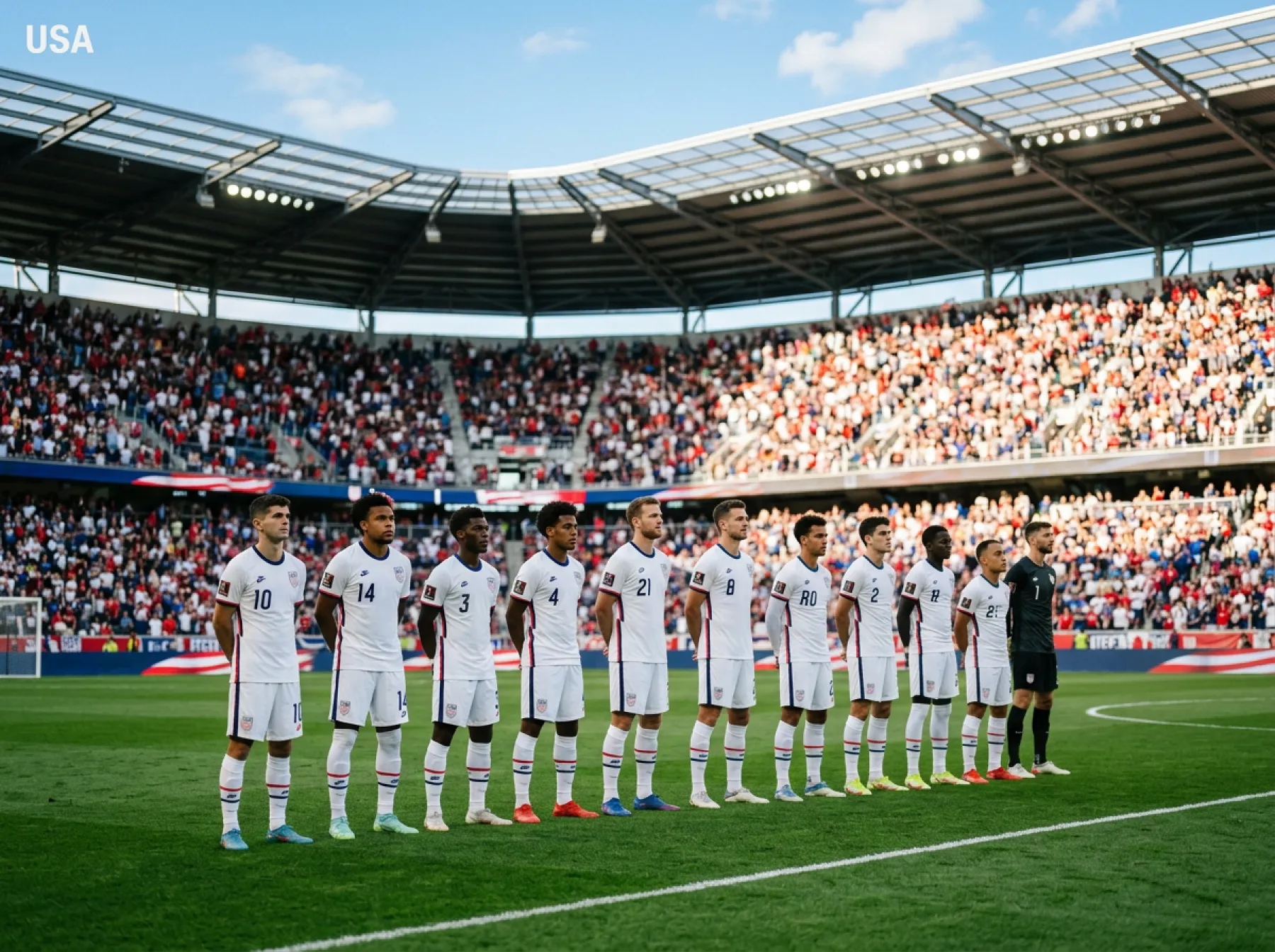
Hosting a World Cup changes everything. The last three host nations all reached at least the quarter-finals — Russia in 2018, Brazil in 2014, South Africa exceeded expectations in 2010 — and the USA enter the 2026 tournament with advantages that extend far beyond familiar stadiums and home crowds. The USMNT have prepared for this moment across an entire generation of player development, from the founding of MLS academies in the 2000s to the current crop of European-based players who represent the most talented American squad in history. Priced around 15.00-20.00 outright, the hosts are positioned as a dark horse with genuine upset potential, and the home advantage factor makes their odds more attractive than a pure talent assessment would suggest. For NZ punters, the USA represent a market where emotion (patriotic betting, inflated home-crowd expectations) may distort odds in both directions.
Pulisic, Balogun and the European Pipeline
Christian Pulisic (AC Milan) is the player the American public has invested its footballing hopes in since he debuted for Borussia Dortmund at 17. At 27, Pulisic has matured into a complete attacking midfielder — comfortable on the right wing, through the centre, or as a second striker. His 2025-26 Serie A season produced 14 goals and 8 assists, and his ability to produce crucial goals in tournament football (the opening goal against Iran at the 2022 World Cup) makes him the squad’s most important player in tight matches. Pulisic’s movement between the lines, ability to receive under pressure and eye for a final-third pass give the USA a creative outlet that operates at genuine Champions League level. His leadership has grown across his years in Europe — he wears the captain’s armband with authority and his performances in decisive moments set the standard for younger squad members.
Weston McKennie (Juventus) provides box-to-box midfield energy that few players at the tournament can match for sheer volume of ground covered. McKennie’s pressing intensity, aerial ability in both boxes and willingness to make late runs into the penalty area add a goal threat from midfield that complements Pulisic’s creative output. Tyler Adams anchors the defensive midfield with positional intelligence and ball-winning ability honed across seasons in the Bundesliga and Premier League — his ability to read passing lanes and intercept in dangerous areas is the defensive foundation that allows Pulisic and McKennie freedom to attack. Gio Reyna (Borussia Dortmund) offers creative spark from wide positions or the number ten role — his technical quality is the highest in the squad, though injury concerns have limited his consistency across multiple seasons.
The centre-forward position has been transformed by the emergence of Folarin Balogun (Monaco), whose goals-per-90 rate in Ligue 1 across the 2025-26 season placed him among the top strikers in France. Balogun’s movement, aerial ability and finishing give the USA a focal point that previous squads lacked — a number nine capable of holding the ball up against elite centre-backs and converting half-chances in the penalty area. His international career, having chosen the USA over England and Nigeria, adds a layer of commitment that resonates with the squad’s collective identity.
The defensive spine is anchored by Sergiño Dest, whose experience at Barcelona and AC Milan provides the positional intelligence needed at fullback, and Chris Richards (Crystal Palace), a centre-back whose Premier League development has added physicality and aerial ability to his technically strong baseline. Tim Ream provides veteran leadership at centre-back — at 38, his experience across multiple qualifying campaigns and the 2022 World Cup gives the defensive unit a calming presence during high-pressure moments. The goalkeeper situation features Matt Turner, who has established himself as the number one through consistent performances across Premier League and MLS campaigns. Turner’s shot-stopping and command of the area are solid, though his distribution remains a step below the world-class level required to build attacks from the back against elite pressing sides. The squad’s depth is thinner than elite European nations — the gap between first-choice and backup players is wider, particularly in central midfield and at centre-back — which makes injury management across the group stage critical. The bench includes MLS-based players who provide energy and work rate but may struggle with the tactical demands and physical intensity of World Cup football against European and South American opposition.
Group D — Paraguay, Australia, Turkey
The draw gods smiled on the USA. Group D contains no top-ten ranked opponent, and the path to qualification looks navigable even without home advantage. Turkey are the strongest rival — their physical, pressing-oriented style under the current manager caused problems for European opponents during the UEFA playoff campaign, and their squad features several Bundesliga and Premier League regulars who bring tactical awareness and big-match experience. Turkey’s qualification through the playoff path (beating Kosovo 1-0 in a tense encounter) demonstrated resilience, but their inconsistency across the earlier qualifying rounds suggests a team that performs in spikes rather than sustained excellence. Paraguay bring South American experience, defensive organisation and the kind of tactical cynicism — shirt-pulling, time-wasting, simulation — that frustrates technically superior opponents in tournament football. Paraguay’s CONMEBOL qualifying campaign showed a team capable of grinding results through defensive discipline, and they will not be easy to break down. Australia — the trans-Tasman rivals that NZ fans will follow closely — offer pace and energy but limited depth, and their chances are discussed in detail on the Socceroos page.
The USA vs Turkey fixture on the final matchday is the likely group decider. If the USA take maximum points from Paraguay and Australia, the Turkey match becomes a contest for top spot rather than survival. Turkey’s pressing intensity could trouble the USA’s build-up play in the opening fifteen minutes, but the home crowd’s energy — expected to exceed 70,000 at most venues — should provide the hosts with a psychological boost that settles nerves and creates an imposing atmosphere for the visiting side. The USA vs Paraguay match is the fixture where the hosts must establish authority: a comfortable victory (2-0 or 3-0) would settle the squad, send a message to Group D rivals, and provide the goal difference cushion that could prove decisive in tiebreaker scenarios.
| Market | USA | Turkey | Australia | Paraguay |
|---|---|---|---|---|
| Group D winner | 1.70 | 2.80 | 6.00 | 8.00 |
| To qualify (top 2) | 1.25 | 1.50 | 3.20 | 4.50 |
USA Odds — Home Advantage Factor
Outright odds of 15.00-20.00 reflect a squad that bookmakers rank around 12th-15th in the tournament hierarchy but with a home advantage multiplier that pushes them into the conversation as potential quarter-finalists. The “to reach quarter-finals” market at 2.80 is the line I find most attractive — the group is soft, the Round of 32 opponent will be manageable, and home advantage in a Round of 16 match could provide the decisive edge in a tight contest.
Does Hosting Help? Historical Data
The historical record for host nations at World Cups is remarkably positive. Since 1990, every host nation has progressed beyond the group stage — including South Korea (semi-finals, 2002), Japan (round of 16, 2002) and Russia (quarter-finals, 2018). The advantages are multifaceted: familiar playing conditions, no jet lag or acclimatisation issues, massive crowd support that creates a 12th-man effect, and the psychological comfort of sleeping in your own bed (several USA players will be based near their club facilities during the tournament). The USA’s specific advantage is climate familiarity — North American summer heat, which European and South American teams may struggle with, is simply normal conditions for MLS-based players and American citizens who have lived in these cities their entire lives. Stadium-specific knowledge matters too: understanding the playing surface at Lumen Field, the wind patterns at MetLife Stadium, and the altitude-adjusted air density at venues like AT&T Stadium provides micro-advantages that accumulate across multiple matches.
Betting Angle — Where’s the Value?
The USA’s most attractive betting angle for NZ punters is in the “to reach quarter-finals” and match-specific markets rather than the outright. The outright at 15.00-20.00 requires the USA to win seven matches — an ask that exceeds the squad’s realistic ceiling against elite European and South American opposition. The quarter-final market at 2.80 requires just four wins (including a likely walkover in the Round of 32), and home advantage makes each of those wins more probable than the raw squad quality suggests.
Match-level value exists in the group stage: USA to win all three group matches prices around 3.50 as a treble, and home advantage across all three fixtures supports that outcome. Total goals markets are also interesting — the USA’s attacking quality combined with defensive fragility suggests over 2.5 goals in most group matches, particularly against Turkey where both teams’ tactical profiles favour open, end-to-end football. For the tournament as a whole, the USA represent a solid multi-bet leg for Kiwi punters building accumulators around group-stage outcomes.