
Loading...
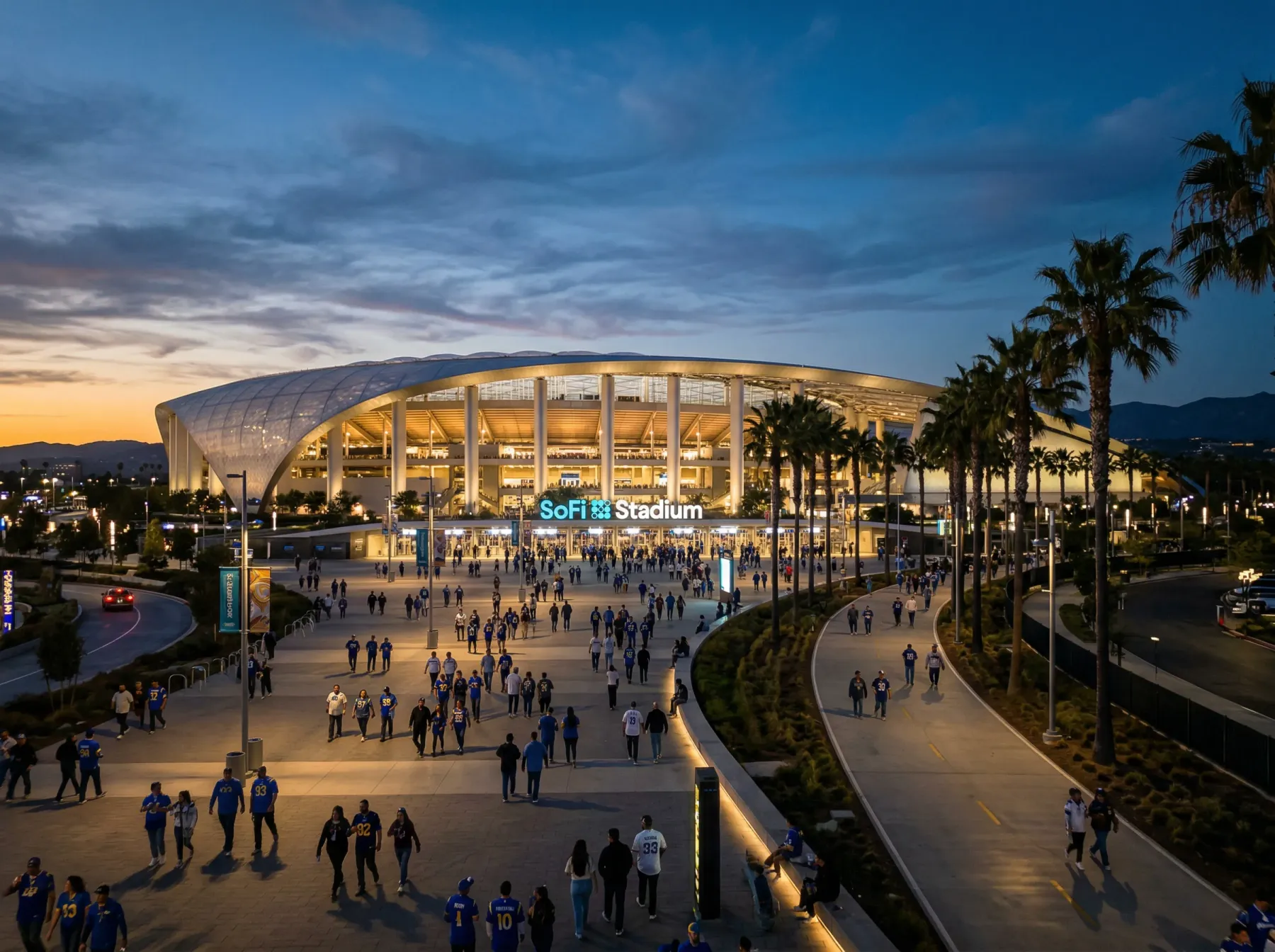
The first time I walked through the concourse at SoFi Stadium for a friendly in 2024, I understood why FIFA chose it. The place is enormous — 70,000 seats rising in tiers that wrap around the pitch with an intimacy that belies the capacity — and the retractable panels in the roof structure create a light quality that television cameras love. For New Zealand fans, SoFi is the stadium that matters most at the 2026 World Cup: it hosts Iran versus New Zealand on 16 June, the All Whites’ opening match and the fixture that defines their entire tournament. This is where your World Cup begins.
About SoFi Stadium
SoFi Stadium sits in Inglewood, a city within the greater Los Angeles metropolitan area, roughly 5 kilometres from Los Angeles International Airport. The stadium opened in 2020 and cost approximately US$5.5 billion to construct, making it the most expensive stadium ever built at the time. It serves as the home ground for both the Los Angeles Rams and Los Angeles Chargers of the NFL, and its design — by the same architectural firm behind London’s Tottenham Hotspur Stadium — prioritises sightlines, acoustics, and versatile pitch configurations.
For football, SoFi accommodates approximately 70,000 spectators in a configuration that brings fans closer to the pitch than the NFL setup allows. The roof is not fully enclosed — it features a translucent canopy structure that shields from direct sun and rain while allowing airflow — which creates a semi-outdoor atmosphere that feels distinctly different from the domed stadiums elsewhere in the tournament. The playing surface for the World Cup will be natural grass installed over the stadium’s usual artificial turf, following FIFA’s requirements for World Cup venues.
The location within Los Angeles gives SoFi access to the largest sports market in the United States. Southern California’s football culture has expanded dramatically over the past decade, driven by LAFC’s MLS success and the general growth of the sport among younger demographics. The 2026 World Cup matches at SoFi will attract a diverse, knowledgeable crowd that includes significant diaspora communities for virtually every competing nation, which means atmosphere levels will be high regardless of which teams are playing.
World Cup 2026 Matches at SoFi
SoFi Stadium is scheduled to host multiple group-stage matches and potentially knockout-round fixtures. The confirmed group-stage assignments include matches from Groups D and G, with the Iran versus New Zealand opener and Belgium versus Iran from Group G among the headline fixtures. The stadium is also set to host Group D matches featuring the USA, giving it a blend of host-nation fixtures and international clashes that will test the venue’s operational capacity across multiple matchdays.
| Date (ET) | Date/Time (NZT) | Match | Group |
|---|---|---|---|
| 15 June, 9 PM ET | 16 June, 1:00 PM NZT | Iran vs New Zealand | G |
| 21 June, 3 PM ET | 22 June, 7:00 AM NZT | Belgium vs Iran | G |
The stadium’s World Cup schedule makes it a key venue for Group G, hosting two of the six group matches. For Kiwi fans making the journey to LA, the Iran-New Zealand fixture on 16 June at 9 PM local time (1 PM NZT the same day) is a prime-time kickoff that will fill the stadium. Evening matches in LA during June benefit from comfortable temperatures — around 22 degrees at kickoff — and the fading golden-hour light through SoFi’s translucent roof creates a visual atmosphere that few stadiums can match.
All Whites at SoFi — Iran vs New Zealand
This is the match that every New Zealand football fan has circled since the draw. Iran versus New Zealand at SoFi Stadium on 16 June is the All Whites’ entry point to the 2026 World Cup, and the venue could not be more appropriate. Los Angeles is home to one of the largest New Zealand diaspora communities in North America — estimates place the Kiwi population in greater LA at between 15,000 and 25,000, supplemented by thousands more who will fly in from NZ for the occasion. The atmosphere inside SoFi will feature a significant block of All Whites supporters creating the kind of noise that the team has rarely experienced at a World Cup.
Iran also have a substantial diaspora presence in Los Angeles — the city hosts the largest Iranian community outside Iran, often called “Tehrangeles” — which means this match will generate a genuine rivalry atmosphere rather than the one-sided support that smaller nations typically face. The 70,000 seats will be divided between vocal Iranian and New Zealand contingents, with neutral American fans filling the gaps and creating an electric environment that benefits whichever side starts the match with more energy and intent.
From a betting perspective, the SoFi venue has specific characteristics that favour certain styles of play. The natural-grass surface installed for the World Cup will be fresh and fast, rewarding sides that play quick, ground-based passing football. The semi-enclosed roof structure creates acoustics that amplify crowd noise without the echo effect of fully domed stadiums, which can disorient visiting sides. Iran’s compact, counter-attacking style is well-suited to the stadium’s dimensions, but New Zealand’s transition-based approach benefits equally from the fast surface and the crowd energy that a significant Kiwi presence will generate.
The kickoff time — 9 PM local, 1 PM NZT — means the stadium will be bathed in artificial light for the second half, which changes the visual dynamic on television and in person. Night matches at SoFi create an atmosphere that daytime fixtures cannot replicate, and the emotional weight of a World Cup opener under the lights adds a layer of occasion that could lift New Zealand beyond their ranking. I rate the match at Iran 2.30, draw 3.10, New Zealand 3.40 — and the draw at 3.10 is the selection I recommend for every Kiwi punter watching from home.
Los Angeles — Quick City Guide
Los Angeles in June is not the sweltering furnace that people imagine. Average temperatures sit around 24-28 degrees Celsius with low humidity and virtually no rain — ideal conditions for both players and spectators. The city sprawls across a vast basin between mountains and ocean, and navigating it without a car requires patience and advance planning. The Metro E Line runs within walking distance of SoFi Stadium from downtown LA, and the LAX FlyAway bus connects the airport to the Metro system for around US$10.
For NZ fans making the trip, the direct Auckland-to-LA flight route (approximately 12 hours) is the most convenient path to any World Cup venue. Air New Zealand operates daily services, and the time zone shift is manageable: LA is 19 hours behind NZT in June, which means departing Auckland on Saturday morning puts you in LA on Saturday morning — the same calendar day, with an entire day to acclimatise before the match.
Accommodation near SoFi Stadium clusters around Inglewood and the surrounding neighbourhoods. Budget options start from US$120 per night for chain hotels within a 15-minute drive of the stadium, while premium options in nearby Manhattan Beach or El Segundo offer beachfront locations at US$250-400. Book early — the World Cup will compress availability across greater LA, and prices near match venues spike 2-3 times normal rates during tournament periods. Expect the area around SoFi to host fan zones, food markets, and screening events throughout the tournament, creating a festival atmosphere that extends well beyond the stadium.
Getting to SoFi from New Zealand
The Auckland-Los Angeles route is the NZ football fan’s golden corridor for 2026. Direct flights take approximately 12 hours, with Air New Zealand and other carriers operating daily services. From LAX, SoFi Stadium is a 15-minute drive or a 40-minute public transport journey via the Metro C Line to Inglewood. The proximity of the airport to the stadium is SoFi’s logistical advantage — no other World Cup venue sits this close to a major international gateway.
For fans combining the Iran match (16 June at SoFi) with the Egypt match (22 June at BC Place in Vancouver), the LA-to-Vancouver route is straightforward: a 3-hour flight or a scenic 20-hour drive up the Pacific Coast Highway. Budget carriers operate this route frequently, and prices in mid-June range from US$80-200 one-way. Plan the logistics early, because flight availability between World Cup host cities will tighten as the tournament approaches. The full Group G breakdown maps the All Whites’ three-match schedule across both venues.