
Loading...
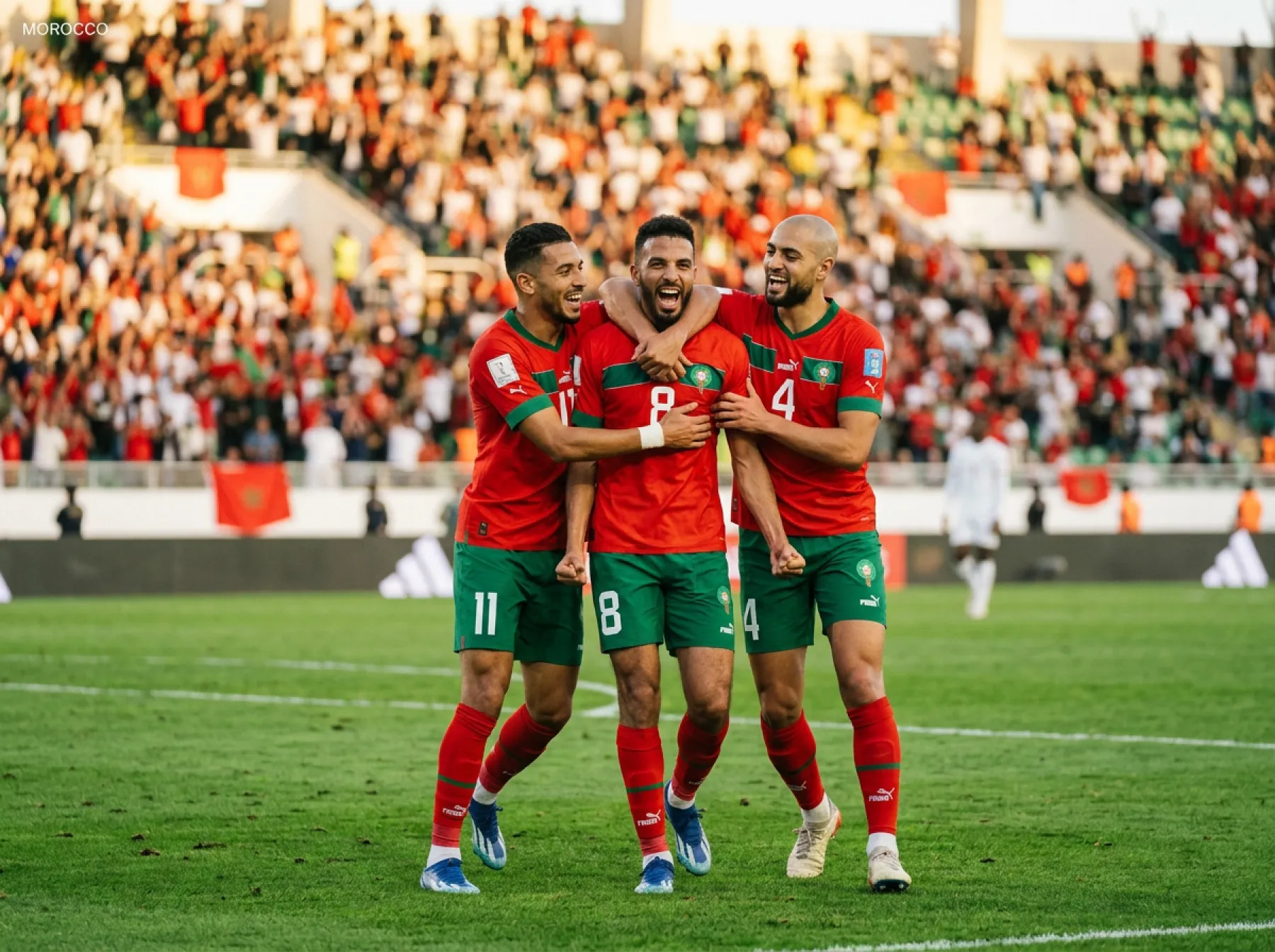
Four years ago, Morocco became the first African nation to reach a World Cup semi-final. The Atlas Lions’ run through the 2022 tournament in Qatar — beating Belgium, Spain and Portugal before falling to France — rewrote the narrative around African football and established Morocco as a squad that belongs among the world’s best. The question for 2026 is whether that run was a once-in-a-generation peak or the beginning of sustained excellence. The squad has evolved since Qatar, with several key players from the 2022 campaign ageing out while a new generation of European-based talent has emerged. Morocco at the 2026 World Cup are priced around 25.00-30.00 outright, placing them among the dark horse tier — a price that reflects both their proven ability to beat elite opposition and the uncertainty about whether this version of the squad can replicate the 2022 magic.
Hakimi’s Full-Back Masterclass and the 2022 Core
Achraf Hakimi (PSG) remains the squad’s most valuable player. His ability to operate as an attacking right-back — overlapping, underlapping, carrying the ball into the final third — gives Morocco a dimension that transforms their shape from defensive to attacking within seconds. Hakimi’s pace, crossing ability and defensive recovery speed make him one of the best fullbacks at the tournament, and his leadership within the squad has grown since the 2022 campaign. Youssef En-Nesyri provides the goal threat up front, with aerial ability and movement in the penalty area that complement Morocco’s crossing-based attacking approach.
The midfield features Azzedine Ounahi, whose performances at the 2022 World Cup earned him a move to European football, and Sofyan Amrabat, the defensive midfielder whose tireless running and ball-winning provide the platform for Morocco’s pressing game. Amrabat’s energy and positioning are the engine of Morocco’s system — he covers more ground per match than any other defensive midfielder in African football, and his ability to intercept passes in the central channel disrupts opposition build-up play before it reaches dangerous areas. The defensive backbone — Nayef Aguerd (West Ham United) alongside a younger centre-back partner — maintains the low-block discipline that carried Morocco past Spain and Portugal in Qatar. Aguerd has developed into one of the Premier League’s most complete defenders, comfortable on the ball and dominant aerially. The goalkeeping position belongs to Yassine Bounou (Al-Hilal), whose penalty-saving heroics against Spain in 2022 remain one of the defining moments of that tournament. Bounou’s shot-stopping consistency and command of the area provide the defensive platform that Morocco’s system depends upon.
The full-back positions are Morocco’s greatest tactical asset. Hakimi on the right and Noussair Mazraoui (Manchester United) or an alternative on the left provide overlapping and underlapping runs that stretch defences horizontally and create the crossing opportunities that En-Nesyri thrives on. Hakimi’s ability to operate as a winger in the attacking phase while recovering to defend in transition is rare at any level — at the World Cup, it gives Morocco an extra attacking option without sacrificing defensive stability. The width generated by the full-backs is critical to Morocco’s counter-attacking system: when opponents commit numbers forward, the transition through the flanks creates two-on-one situations that Hakimi and En-Nesyri exploit with devastating efficiency.
Group C — Brazil, Haiti, Scotland
Morocco drew the group’s toughest possible opponent in Brazil, but the Atlas Lions have beaten higher-ranked sides at World Cups before and will approach the fixture with genuine belief. The Morocco vs Brazil match is the group’s headline fixture — a clash between two contrasting styles where Morocco’s compact defence meets Brazil’s creative attack. Morocco’s tactical template against elite opposition is well established: a 4-1-4-1 low block that denies space in central areas, forces opponents wide, and relies on counter-attacking speed through Hakimi and the wide midfielders. This approach suffocated Spain’s possession game at the 2022 World Cup and could be equally effective against a Brazilian side that prioritises possession.
Haiti and Scotland are opponents Morocco should handle, though neither should be dismissed. Scotland’s physicality, pressing intensity and aerial threat from set pieces will test Morocco’s composure on the ball, and the Tartan Army’s passionate support will create atmosphere in North American stadiums. The Morocco vs Scotland fixture is likely the match where both teams’ qualification hopes are decided: the loser faces probable elimination, the winner controls their destiny heading into the final matchday. Morocco to beat Scotland prices around 1.70-1.80 and represents a solid multi-bet leg given the quality differential. Haiti, qualified through CONCACAF for only their second World Cup since 1974, bring passion and counter-attacking pace but lack the squad depth to sustain a challenge. Morocco should handle Haiti comfortably and focus their preparation on the Brazil and Scotland fixtures where the outcomes carry the most weight.
| Market | Brazil | Morocco | Scotland | Haiti |
|---|---|---|---|---|
| Group C winner | 1.35 | 3.50 | 9.00 | 51.00 |
| To qualify (top 2) | 1.08 | 1.80 | 4.50 | 26.00 |
Morocco Odds
Morocco to qualify from Group C at 1.80 is one of the strongest bets in the tournament for NZ punters. The Atlas Lions’ 2022 World Cup performances proved they can compete at the highest level, and the group draw — while containing Brazil — also features two opponents (Scotland, Haiti) that Morocco should beat comfortably. Second place behind Brazil is the realistic target, and 1.80 for qualification represents fair value rather than a clear edge. The group winner market at 3.50 is more speculative but not outlandish — if Morocco beat Brazil (a result that is no longer unthinkable after the 2022 run), the remaining fixtures become straightforward. For punters building multi-bets, Morocco to qualify from Group C is a reliable leg that combines well with other group-stage selections.
Match-level betting on Morocco’s fixtures offers specific angles. Morocco vs Brazil will be a tight, tactical affair — under 2.5 goals at around 1.70 reflects the defensive approaches of both teams, and the draw at 3.20 is the value play for punters who believe Morocco can replicate their 2022 approach of frustrating elite opponents and capitalising on one or two counter-attacking opportunities. Morocco vs Scotland is the fixture where the Atlas Lions are clear favourites (around 1.70-1.80), and same-game multis combining Morocco win with under 2.5 goals create compound odds around 2.80 that reflect a highly probable match outcome.
Can Morocco Repeat 2022?
The honest answer is: probably not at the same level, but close enough to matter for betting purposes. The 2022 run was fuelled by a combination of tactical discipline, collective belief and individual moments of quality that aligned perfectly across seven matches. Replicating that alignment at a different tournament, with different conditions and a partially different squad, is statistically improbable — teams that overperform at one World Cup typically regress toward their expected level at the next. The semi-final ceiling of 2022 may be replaced by a quarter-final ceiling in 2026 — still a remarkable achievement for an African nation, and still a run that would generate significant returns for punters who backed Morocco in progression markets early.
Morocco’s defensive system remains their calling card. The low-block 4-1-4-1 that frustrated Spain and Portugal is unchanged, and the pressing triggers — engaging the opponent when the ball reaches the halfway line, retreating behind the ball when pressed in their own half — create a predictable but effective structure that has become a template for other African and Asian sides. The difference between 2022 and 2026 is the element of surprise: opponents now know what Morocco do and will prepare specifically for their system. Whether Morocco have evolved tactically to counter those preparations — perhaps by adopting a more possession-oriented approach against weaker opponents while retaining the counter-attacking template against elite sides — will determine how far they progress. The early evidence from qualifying suggests they have: Morocco averaged 56% possession during CAF qualifying, up from 44% at the 2022 World Cup, indicating a willingness to control matches when the opponent’s quality allows it.
World Cup Record
Morocco’s World Cup record before 2022 was modest: three group-stage exits (1986, 1994, 1998) and a round-of-16 near-miss in 1986 when a late West German goal denied them. The 2022 semi-final run transformed Morocco’s World Cup identity from plucky participants to genuine contenders, and the current squad carries that confidence into every match. The Atlas Lions are the reigning standard-bearers for African football at World Cups, and their performances set the benchmark for CAF nations at the 2026 tournament. For NZ punters, Morocco are a reliable multi-bet leg in the “to qualify from group” market and a speculative but defensible selection in the “to reach quarter-finals” market at around 3.50.