
Loading...
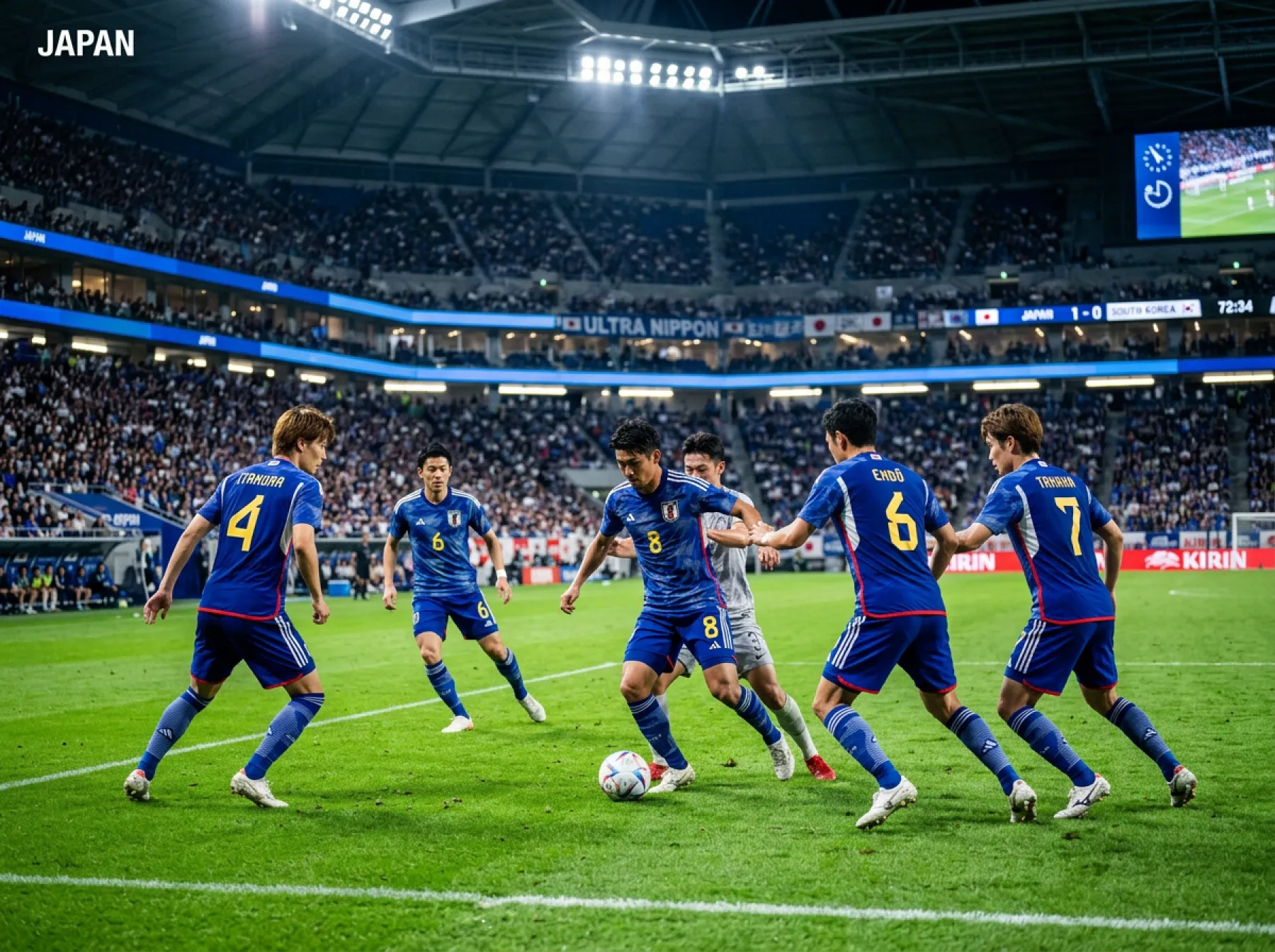
The 2022 World Cup rewrote the script on Japanese football. Victories over Germany and Spain in the group stage — both achieved through second-half comebacks driven by tactical adjustments and relentless pressing — announced Japan as a squad capable of beating anyone on any given day. The Samurai Blue’s round-of-16 exit to Croatia on penalties tempered the euphoria, but the message was clear: Japan are no longer a team that participates at World Cups; they are a team that competes to win matches against elite opposition. The 2026 squad is the most European-based in Japanese football history, with over fifteen players contracted to clubs in the Bundesliga, Premier League, La Liga and Serie A. For NZ punters, Japan at 30.00-40.00 outright are irrelevant, but their Group F position — alongside the Netherlands, Sweden and Tunisia — makes them one of the tournament’s most fascinating dark horses and a squad worth tracking in group-stage markets.
Kubo, Mitoma and the European-Based Core
Takefusa Kubo (Real Sociedad) is the creative heartbeat of Japan’s attack. At 25, Kubo has developed from a former Barcelona youth product into one of La Liga’s most effective attacking midfielders, combining dribbling ability, set-piece delivery and goal-scoring instinct. His ability to operate on either wing or through the centre gives Japan’s manager tactical flexibility, and his understanding of European defensive systems — cultivated across five seasons in La Liga — means he anticipates and exploits weaknesses that other Asian-based attackers might miss. Kubo’s 2025-26 La Liga season produced 11 goals and 8 assists, numbers that placed him among the top attacking midfielders in Spain, and his set-piece delivery — both from corners and free kicks — adds a dead-ball dimension that Japan have historically lacked at World Cups.
The midfield trio is Japan’s greatest strength and the reason I rate them above their FIFA ranking suggests. Wataru Endō (Liverpool) provides the defensive base with Premier League-level ball-winning and distribution — his ability to read the game, intercept passes and immediately release the ball forward gives Japan’s transition game a foundation that most Asian sides cannot replicate. Daichi Kamada (Crystal Palace) adds creative passing and goal threat from the number eight position, arriving late in the box for shots and threading through-balls that split defensive lines. Kaoru Mitoma (Brighton) — technically a winger but often deployed in a free role — provides the directness and dribbling that Japan need to break through compact defences. Mitoma’s ability to beat defenders on the left side and deliver crosses or cut-back passes is a specific threat that Group F opponents must plan for. His 2025-26 Brighton season included 9 goals and 7 assists, confirming his status as one of the Premier League’s most dangerous wide players. The squad’s European experience extends to defenders — Ko Itakura (Borussia Mönchengladbach) and Takehiro Tomiyasu (Arsenal) provide Bundesliga and Premier League defensive quality that adds resilience against physical European opponents.
The centre-forward role is less settled, and the solution Japan choose will define their tactical approach. Kyogo Furuhashi (Celtic) offers movement, pressing and finishing but lacks the physical presence to lead the line against European centre-backs who will use their size advantage in aerial duels. The alternative is a false nine system with Kubo dropping deep — an approach that worked effectively against Germany in 2022 but demands precise execution from every attacking player. A third option features a more physical striker supported by Kubo and Mitoma from wide areas, creating a traditional wide-to-cross pattern that Japan rarely employ but that could catch opponents off guard. Japan’s depth across the squad is impressive: the 26-man selection will include players from top European leagues at virtually every position, giving the manager rotation options that most Asian sides cannot match and ensuring that the group-stage schedule does not drain the squad’s energy before a potential knockout-round fixture.
Group F — Netherlands, Sweden, Tunisia
Japan’s Group F draw is challenging but presents a realistic path to the round of 32. The Netherlands are favourites, but Japan proved at the 2022 World Cup that they can beat European heavyweights through tactical discipline and explosive counter-attacking. The Japan vs Netherlands fixture is the group’s key match — a contest between Dutch possession and Japanese pressing that could produce the kind of dramatic tactical battle that defines World Cup group stages. If Japan win this match, they will likely top the group; if they lose, second place remains achievable through victories over Sweden and Tunisia.
Sweden’s physicality and direct playing style present a different kind of challenge. Sweden’s aerial threat from set pieces — their tallest outfield players exceed 195cm — creates a specific danger that Japan’s smaller defensive unit must neutralise through positioning rather than physical contests. The Japan vs Sweden match will be a contrast of styles: Japanese technical quality against Swedish directness, and the outcome will hinge on whether Japan can control possession and prevent Sweden from establishing a set-piece foothold. Tunisia complete the group with African Cup of Nations pedigree and a squad that defends with discipline and attacks with speed on the counter. Tunisia’s pressing intensity is among the highest in African football, and their ability to force turnovers in midfield could create chances against a Japanese side that sometimes over-commits to attacking build-up.
Japan’s approach will mirror their 2022 template: defend deep in the first half, analyse the opponent’s patterns, and then increase pressing intensity after half-time when fatigue opens spaces. This approach produced the comebacks against Germany (trailing 0-1 at half-time, winning 2-1) and Spain (trailing 0-1, winning 2-1) and is now embedded in the squad’s tactical DNA. The manager has refined the system since 2022, adding a higher initial pressing phase in the first fifteen minutes that aims to unsettle opponents before retreating to the deeper block. For NZ punters, Japan’s half-time/full-time markets offer the best value — backing the opponent at half-time and Japan at full-time prices at attractive odds that reflect the squad’s proven ability to transform matches in the second period. This specific market priced at 15.00-20.00 per match represents a high-risk, high-reward angle that has hit in two of Japan’s last six World Cup group matches.
| Market | Netherlands | Japan | Sweden | Tunisia |
|---|---|---|---|---|
| Group F winner | 1.65 | 3.00 | 6.50 | 11.00 |
| To qualify (top 2) | 1.20 | 1.55 | 3.50 | 5.50 |
Japan Odds
Outright odds of 30.00-40.00 place Japan outside the serious contender conversation, but their group-stage and qualification markets tell a different story. Japan to qualify from Group F at 1.55 is one of the best-value bets at the tournament — their 2022 World Cup performances, current squad depth and tactical sophistication support a qualification probability above 70%, making the 64.5% implied by 1.55 a value bet. Japan to win Group F at 3.00 is more speculative but defensible: if they beat the Netherlands (a result they achieved against superior opposition in 2022), the remaining fixtures against Sweden and Tunisia become manageable.
Dark Horse Credentials
Japan’s dark horse status rests on three pillars. First, the squad’s European base provides exposure to tactical systems and physical intensity that most Asian sides cannot replicate — over fifteen players train daily against Champions League-calibre opposition, and that experience translates directly to World Cup match situations where composure under pressure separates competitive sides from also-rans. Second, the tactical template — deep defending followed by explosive pressing and counter-attacking — is specifically designed to exploit the vulnerabilities of possession-heavy European teams who push their defensive lines high and leave space in behind. This is not a theoretical advantage: Japan demonstrated its effectiveness against two of Europe’s best sides at the 2022 World Cup, and the pattern has been refined further across the qualifying campaign. Third, the squad’s collective mentality is tournament-hardened: the 2022 World Cup experience, including the painful penalty defeat to Croatia in the round of 16, has built resilience and the understanding that margins at the World Cup are razor-thin.
Japan’s weakness is their dependency on second-half adjustments — if opponents adapt first, or if Japan concede early and cannot implement their comeback plan, the system breaks down. Against disciplined sides that manage the game intelligently (as Croatia did in the 2022 round of 16), Japan can be contained through possession control and tactical patience. The other vulnerability is penalty shootouts: Japan’s record in knockout-round shootouts is poor, and the absence of a specialist penalty-saving goalkeeper could prove costly if matches extend beyond ninety minutes. For punters assessing Japan’s progression markets, these weaknesses create a ceiling that sits somewhere around the quarter-finals — reaching that stage would be historic, but progressing beyond it requires a level of knockout composure that this squad has not yet demonstrated.
Japan’s World Cup Journey
Japan’s World Cup history reflects a nation that has climbed steadily from debutant (1998) to regular participant to genuine threat. Their best results — round-of-16 appearances in 2002 (as co-hosts), 2010, 2018 and 2022 — show a ceiling that the current squad is equipped to break through. The 2002 home tournament, where Japan reached the round of 16 before losing to Turkey, remains the emotional touchstone for Japanese football, but the 2022 campaign in Qatar surpassed it in terms of on-pitch quality and global recognition. Beating both Germany and Spain in a single group stage — a feat no team had achieved in World Cup history — earned Japan respect that translated directly into improved seedings and more favourable draws.
For the 2026 tournament, Japan’s ambition is explicitly a quarter-final appearance — the final frontier that they have not yet crossed. The squad, the tactical system and the collective experience all support that goal. Whether they achieve it depends on Group F results and the knockout-round draw, but Japan at 6.00-7.00 to reach the quarter-finals represents genuine value for NZ punters who believe the Samurai Blue’s 2022 performances were not a one-off but a signal of permanent improvement in Japanese football’s global standing.