
Loading...
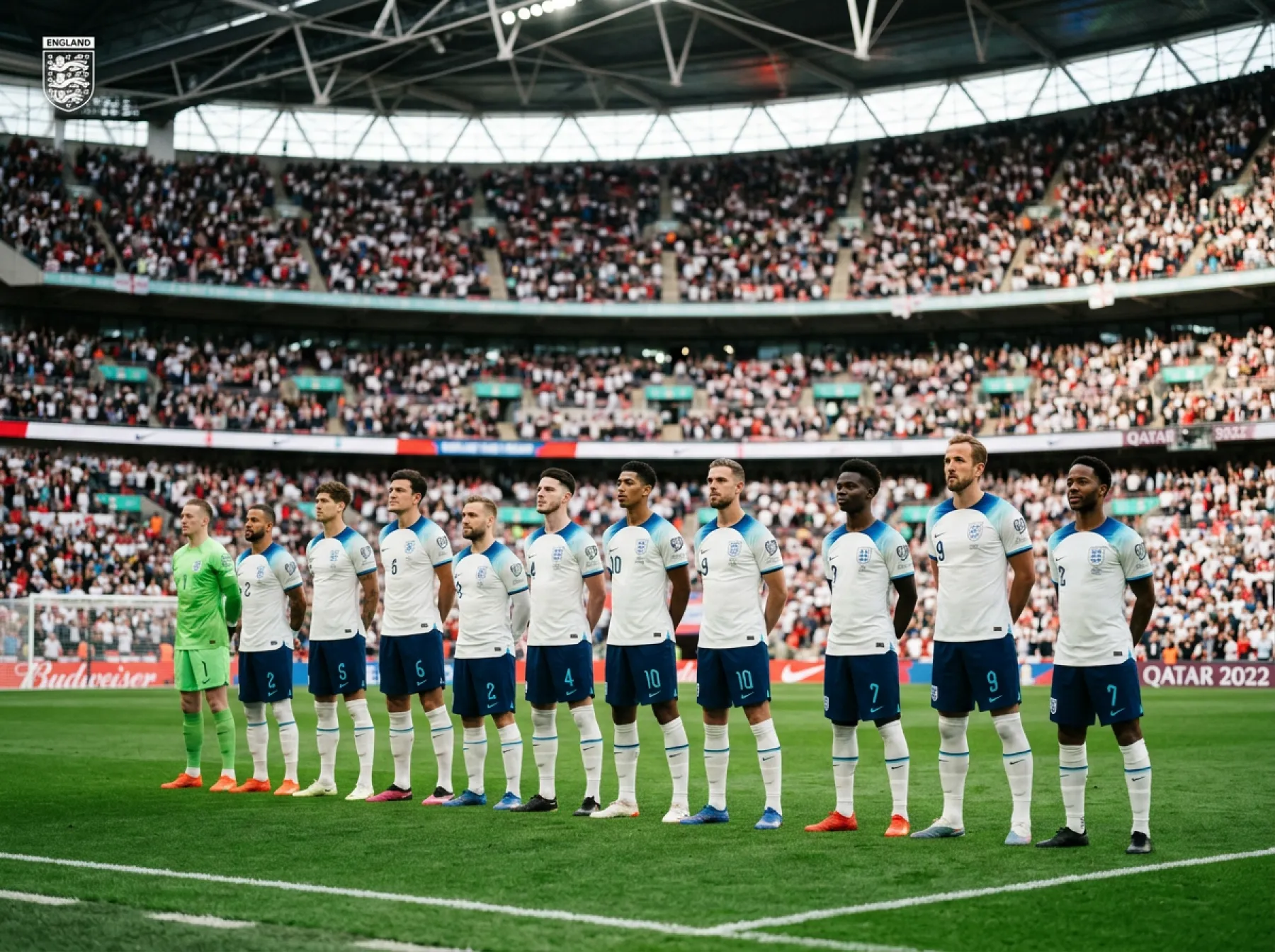
Sixty years and counting. That number — the gap since England’s only World Cup triumph in 1966 — defines everything about this squad’s relationship with the tournament. The Three Lions have been semi-finalists (2018), finalists at the Euros (2020, 2024), and quarter-finalists with agonising regularity, but the trophy cabinet remains stubbornly empty. England at the 2026 World Cup carry the weight of a nation’s expectations and a squad that, on paper, rivals any in the tournament for depth and individual quality. The bookmakers agree: England are priced as co-favourites alongside France, with outright odds around 5.50-6.50 that reflect both the talent available and the persistent question of whether this generation can deliver when the decisive moment arrives. For NZ punters, England represent one of the most bet-on teams in the outright market, and the pricing contains both value and traps depending on which market you examine.
Qualifying Run
England’s road to the 2026 World Cup was so smooth it barely registered as a story. Topping their UEFA qualifying group with eight wins from ten matches, scoring 32 goals and conceding just 5, England cruised through a campaign that tested them physically but rarely tactically. The group — containing weaker UEFA sides without a genuine elite-level opponent — allowed the manager to experiment with formations, integrate younger players and build the understanding between midfield and attack that tournament football demands. The lack of adversity during qualifying is both a positive (confidence, rhythm, clean sheets) and a potential negative (untested under genuine pressure against high-quality opposition). England’s qualifying expected goals against per match averaged just 0.68 — the lowest in European qualifying — but that number was inflated by the quality gap rather than defensive excellence. When England faced ranked opponents in friendlies, the defensive numbers told a different story: 1.4 xGA per match against top-twenty sides, exposing vulnerabilities that Group L opponents may not exploit but knockout-round rivals certainly will.
The managerial situation settled after the turbulence of the post-Southgate era. Gareth Southgate’s departure following Euro 2024 triggered a period of uncertainty that the Football Association resolved by appointing a successor who maintained Southgate’s emphasis on squad culture while introducing more aggressive attacking principles. The tactical shift — from Southgate’s conservative 3-4-3 to a 4-3-3 that encourages fullback overlaps and midfield pressing — has produced more entertaining football and higher scoring rates, though questions remain about defensive solidity in the absence of the disciplined low-block structure that carried England to two tournament finals under Southgate.
The pre-tournament form was encouraging. England won five of their six matches in the March 2026 international window, beating Italy, Netherlands and Portugal in friendlies that provided genuine tests. The squad’s confidence is high, the tactical identity is clearer than at any point since Southgate’s departure, and the Premier League’s dominance in European competition across the 2025-26 season means England’s players arrive at the World Cup match-fit and accustomed to high-intensity football. The concern is fatigue — a long Premier League season, domestic cup runs and Champions League campaigns for several key players mean England’s squad may have fewer fresh legs than opponents from less demanding leagues.
Bellingham, Kane and the Premier League Core
Jude Bellingham has become the player England build their entire attacking structure around. At 22, the Real Madrid midfielder combines the physical presence of a box-to-box player with the technical quality of a number ten and the goal-scoring instinct of a second striker. Bellingham’s ability to arrive late in the penalty area — timing runs from deep positions that defenders cannot track — generated 18 La Liga goals in the 2025-26 season, and his performance at Euro 2024, where his overhead kick against Slovakia rescued England from elimination, demonstrated a clutch gene that tournament football rewards. For NZ punters, Bellingham as anytime goalscorer per match (around 3.00-3.50) represents consistent value across a tournament where England are expected to dominate possession and create volume.
Harry Kane enters the 2026 World Cup at 32, likely playing his final major tournament as England’s primary striker. Kane’s goal record — England’s all-time top scorer with over 65 international goals — speaks to an elite finishing ability that has not diminished with age. His movement in the penalty area, heading ability and penalty-taking reliability (over 90% conversion rate in competitive matches) make him the most complete centre-forward at the tournament. The question is whether his legs can sustain seven matches across five weeks in North American summer heat, and whether the manager will manage his minutes by rotating with alternative attacking options.
The defensive spine is anchored by John Stones (Manchester City) and a younger partner, likely Marc Guéhi (Crystal Palace) or Levi Colwill (Chelsea). Stones’ experience — four major tournaments — provides the composure and ball-playing ability that England’s build-up system requires. Trent Alexander-Arnold occupies either the right-back or central midfield role, and his passing range from deep positions — long diagonals, through-balls, set-piece delivery — adds a creative dimension that most teams only get from their number ten. Bukayo Saka (Arsenal) on the right wing is among the top five wide attackers at the tournament: direct, capable of beating defenders, comfortable cutting inside onto his left foot, and increasingly prolific in front of goal. Phil Foden (Manchester City) provides left-sided creativity and goal threat, though his international form has not consistently matched his extraordinary club-level performances.
Declan Rice (Arsenal) anchors the midfield with defensive discipline and progressive passing. His partnership with Bellingham — Rice holding, Bellingham advancing — is the axis around which England’s midfield functions, and the balance between the two is critical. If Rice is forced to cover for attacking fullbacks and Bellingham pushes forward simultaneously, the gap between defence and midfield widens dangerously. Managing that spatial relationship will be the coaching staff’s primary tactical challenge across the tournament. Kobbie Mainoo (Manchester United) provides a younger midfield alternative capable of playing either the holding or advancing role, and his emergence across the 2025-26 Premier League season gives the manager rotation options that were absent at Euro 2024. Cole Palmer (Chelsea) adds a creative dimension from either the wing or the number ten position — his shooting accuracy and ability to produce moments of individual brilliance off the bench make him one of the most impactful substitutes at the tournament.
Goalkeeper Jordan Pickford (Everton) maintains his position through tournament experience and big-match temperament. His penalty shootout record — saving decisive penalties against Colombia (2018), Italy (Euro 2020 loss aside) and Switzerland (Euro 2024) — gives England a psychological edge in elimination matches. Pickford’s distribution and command of the area have improved across his career, and he enters the 2026 World Cup as one of the tournament’s more experienced goalkeepers.
Group L — Croatia, Ghana, Panama
England’s group contains one genuine rival and two opponents who will compete fiercely but lack the squad depth to sustain a three-match challenge. Croatia, despite their ageing squad, remain dangerous — their World Cup pedigree (final in 2018, semi-final in 2022) demands respect, and the technical quality of their midfield, even in transition between generations, is among the best in the tournament. Luka Modrić has retired from international football, but the midfield inheritance — younger players schooled in the same possession-based philosophy that defined Croatia’s golden generation — ensures continuity of style if not individual brilliance. The England vs Croatia fixture on the final matchday carries the weight of recent history: England lost to Croatia in the 2018 World Cup semi-final, a result that still stings for players who were part of that squad. The tactical matchup between England’s aggressive pressing and Croatia’s patient build-up will define the group’s outcome.
Ghana bring pace, physicality and a squad that includes several Premier League and Bundesliga regulars. Their pressing intensity and willingness to attack can cause problems for teams that sit back, but England’s system — which encourages possession and territorial dominance — should control Ghana’s attacking threats by limiting their time on the ball. Ghana’s World Cup history includes memorable runs in 2010 (quarter-final, the Suárez handball) and a competitive showing in 2014, and the current squad carries enough quality to make the match uncomfortable if England underperform. Panama, returning to the World Cup for the second time after their 2018 debut, are the group’s weakest team on paper but will approach the tournament with the kind of passionate defiance that neutrals love and favourites find irritating. Their 6-1 loss to England in 2018 will fuel a desire for redemption, though the quality gap remains substantial. England should handle both opponents, but the scheduling — with Croatia last — means the group could carry tension into the final matchday if results do not go to plan in the first two rounds.
| Market | England | Croatia | Ghana | Panama |
|---|---|---|---|---|
| Group L winner | 1.35 | 3.50 | 8.00 | 31.00 |
| To qualify (top 2) | 1.08 | 1.70 | 4.00 | 14.00 |
England Odds — Outright and Group
The English public bets on England with their hearts rather than their heads, and the market knows it. Outright odds of 5.50-6.50 make the Three Lions co-favourites, implying a 15-18% probability of winning the tournament. Advanced models — which account for squad quality, draw difficulty and historical tournament performance — place England’s actual probability closer to 12-14%, suggesting the outright market is slightly overpriced by the weight of English money. That does not mean England cannot win — their squad is genuinely among the best three at the tournament — but it means the odds do not offer the value that casual punters assume. The gap between implied and actual probability is approximately 3-4%, which translates to a meaningful edge for punters willing to fade the public narrative and look elsewhere in the outright market. Alternatively, building same-game multis around England’s group matches — combining England win with under 3.5 goals or Bellingham anytime scorer — offers better risk-adjusted returns than the outright bet.
| Market | Odds | Implied Probability |
|---|---|---|
| Outright winner | 6.00 | 16.7% |
| Group L winner | 1.35 | 74.1% |
| To reach semi-finals | 2.40 | 41.7% |
| To reach final | 3.50 | 28.6% |
The value for England sits in the “to reach semi-finals” market at 2.40. Their Group L path is navigable, the Round of 32 opponent will be a third-placed team, and the Round of 16 likely features a beatable Group K contender. England’s knockout record under recent managers — reaching at least the quarter-finals in each of the last four major tournaments — supports a semi-final probability higher than the 41.7% implied by the 2.40 odds. I model England’s semi-final probability at approximately 48%, which makes this bet a clear value play.
Kane to finish as top scorer in the group stage (three or four goals across three matches) prices around 4.00, and his penalty-taking duties plus headed goal threat from set pieces make him a volume shooter whose minutes are virtually guaranteed. For Kiwi punters looking at prop markets, Bellingham to register a goal or assist in every group match is a same-game multi angle that prices attractively given his combined output at club level.
Style and Approach
The post-Southgate era has transformed England from a cautious, set-piece-dependent side into a more assertive attacking unit. The current 4-3-3 encourages both fullbacks to push high, with Alexander-Arnold’s passing range from the right creating a numerical overload in midfield that allows Bellingham to advance into the half-spaces. The left-back — likely Luke Shaw or a younger alternative — tucks inside when Alexander-Arnold pushes forward, providing defensive balance without sacrificing attacking width on the opposite flank.
In possession, England build from the back through Stones and the centre-back partner, with Rice dropping between the centre-backs to form a temporary back three. The wide forwards — Saka on the right, Foden on the left — cut inside to create shooting angles, while Kane occupies the central defenders and creates space through intelligent movement. The system generates high expected goals numbers against weaker opposition but can struggle against teams that press aggressively and deny England’s fullbacks time on the ball. Croatia’s midfield pressing could expose this vulnerability, and the England vs Croatia match will be the group’s tactical test of whether England’s new approach holds under pressure from a technically superior midfield.
Defensively, England are less certain than under Southgate’s disciplined low-block system. The higher defensive line invites balls in behind, and the fullbacks’ advanced positioning leaves the centre-backs exposed in wide areas. England conceded 1.2 goals per match in competitive fixtures across 2025-26 — a rate that increased noticeably when facing teams ranked in the top twenty. In knockout football, where single goals determine outcomes, that defensive vulnerability is the primary reason to temper optimism about England’s outright chances. The manager’s willingness to revert to a more conservative shape — potentially a back three or a deeper midfield line — when protecting leads will be tested in the knockout rounds, and England’s tactical flexibility in those moments will likely determine whether this squad breaks through the semi-final ceiling.
England’s transition play is their most dangerous attacking weapon. When the ball is won in midfield, Bellingham, Saka and Foden are among the fastest attackers in world football at converting turnovers into shooting opportunities. England’s counter-attacking expected goals per 90 minutes during qualifying ranked in the top three among European qualifiers, and the combination of Rice’s ball-winning in midfield, Bellingham’s driving runs and Saka’s direct wing play creates a devastating transition sequence that opponents struggle to contain. The challenge is that England sometimes fall in love with possession when they should be more direct — a tendency that flattens their attacking threat against deep-sitting defences and turns matches into slow-tempo affairs where set pieces become the primary route to goal. Against Ghana and Panama, that patience will be tested, and the manager’s ability to identify when to accelerate the tempo will influence goal margins and, consequently, group-stage betting markets around total goals and correct scores.
1966 and the Long Wait
England’s World Cup history is defined by a single afternoon at Wembley on 30 July 1966 and everything that has followed. Geoff Hurst’s hat-trick against West Germany — including the controversial third goal that crossed the line (or did it?) — gave England their only World Cup victory and created an expectation that every subsequent generation has failed to meet. The wait stretches across fifteen tournaments, and the weight of that history is both motivational (the desire to be the squad that finally delivers) and paralysing (the fear of adding another chapter to the story of near-misses). No other major footballing nation carries the same combination of a single triumph and six decades of disappointment — Germany, Brazil, Argentina, France and Italy have all added World Cup victories in the intervening period, making England’s drought increasingly anomalous given the resources, infrastructure and talent the country produces.
The modern era has brought England closer than ever without crossing the line. The 2018 semi-final run under Southgate — including a penalty shootout victory over Colombia that broke a decades-long jinx — restored belief that England could compete at the business end of major tournaments. The Euro 2020 final loss to Italy on penalties, on home soil, was devastating — a moment that appeared to confirm the cruelest interpretation of English football’s relationship with major tournament finals. The Euro 2024 final loss to Spain, after a tournament in which England played below their potential for five of six matches before dramatically improving in the final, reinforced the narrative of a squad that reaches the penultimate stage and then falls short. Whether the 2026 World Cup breaks that cycle depends on factors that transcend tactical preparation: composure under pressure, decision-making in the final third, and the ability to manage the psychological burden that no other nation carries in quite the same way. The current squad has more tournament experience than any previous England group — players like Kane, Stones, Pickford and Rice have collectively played over 30 knockout matches in major tournaments — and that familiarity with high-stakes football should reduce the mental barriers that tripped up previous generations.
For NZ punters, England’s history is relevant to betting in a specific way: the Three Lions consistently deliver deep tournament runs but struggle to win the final match. That pattern makes “to reach semi-finals” and “to reach final” markets more attractive than the outright winner bet, where the probability of England clearing the final hurdle remains lower than their overall quality suggests. Backing England to go far but not all the way is the historically supported position — and until a squad breaks the pattern, it remains the smart bet. The “England to reach semi-finals but not win the tournament” compound bet, where available, is the clearest expression of this thesis.