
Loading...
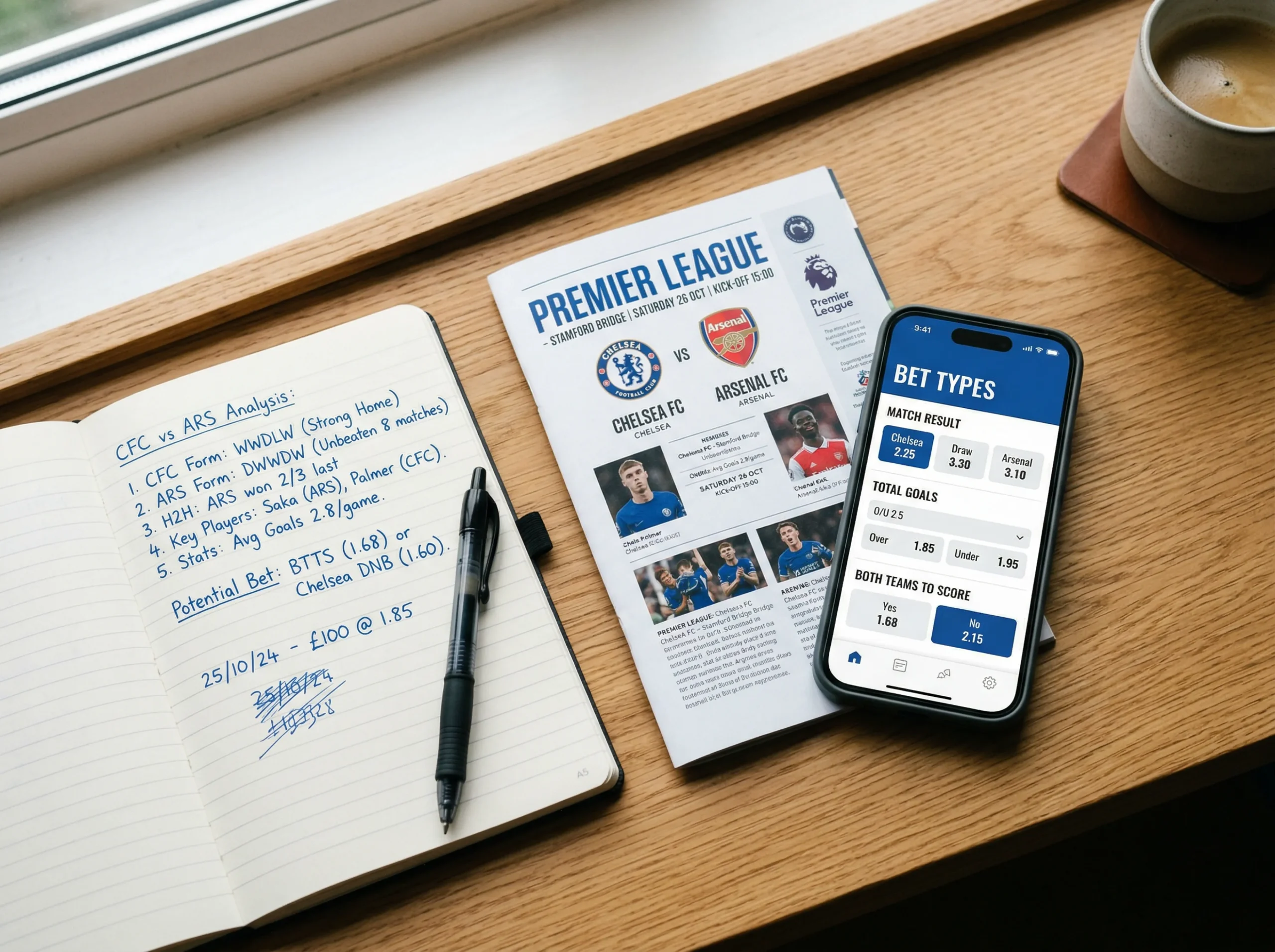
You are watching Iran vs New Zealand at SoFi Stadium on 16 June, the All Whites are hanging on at 0-0 in the 60th minute, and you open TAB NZ to place a live punt. The app shows you a wall of options — 1X2, draw no bet, both teams to score, over/under, same game multi — and you freeze. Every World Cup bet type works differently, pays differently, and carries a different level of risk. I have spent nine tournament cycles watching punters pick the wrong market for the right read, and the fix is always the same: understand what each bet type actually does before the first whistle blows.
Match Bets — 1X2, Double Chance, Draw No Bet
At the 2022 World Cup, Saudi Arabia beat Argentina 2-1 as 17.00 underdogs on the 1X2 market. The punters who backed Saudi Arabia on the moneyline collected big. The ones who backed them on double chance — Saudi Arabia or draw — collected at around 4.50 instead. Same instinct, different execution, wildly different payout. That gap between bet types is where your edge lives or dies.
The 1X2 is the most straightforward World Cup bet. You pick one of three outcomes for a match: home win (1), draw (X), or away win (2). At the group stage, “home” and “away” are assigned by FIFA for administrative purposes — the first-listed team is nominally the home side. Odds are displayed in decimal format on TAB NZ: a price of 2.40 on New Zealand to beat Iran means a $10 bet returns $24.00 total if the All Whites win inside 90 minutes plus stoppage time. Extra time and penalties do not apply at the group stage, so every group match has three possible outcomes.
Double chance collapses those three outcomes into two. You can back “1X” (home win or draw), “X2” (draw or away win), or “12” (either team to win, excluding the draw). This is the safety net for punters who like a team but do not trust them to win outright. The trade-off is obvious — lower risk means lower odds. If New Zealand are 2.40 to beat Iran on the 1X2, the double chance for New Zealand or draw might sit around 1.45. You sacrifice upside for protection, and in a tournament where draws are common — the 2022 group stage produced nine draws in 48 matches — that protection has genuine value.
Draw no bet strips the draw result out entirely. You pick a team to win; if the match ends in a draw, your stake is refunded. It is functionally similar to double chance “1X” but with a refund mechanism rather than a paid-out draw. The odds sit between the 1X2 price and the double chance price. For a match like New Zealand vs Egypt, where a draw is a realistic and even desirable result for the All Whites, draw no bet lets you back NZ at compressed odds while keeping your stake safe if the teams cannot be separated.
| Bet Type | Outcomes Covered | Typical NZ vs Iran Odds (NZ side) | Risk Level |
|---|---|---|---|
| 1X2 (NZ win) | 1 of 3 | 2.40 | High |
| Double chance (NZ or draw) | 2 of 3 | 1.45 | Low |
| Draw no bet (NZ) | 1 of 2 (refund on draw) | 1.75 | Medium |
My rule of thumb: use 1X2 when you have a strong conviction on a winner, double chance when you want exposure to an underdog with a safety margin, and draw no bet when you believe a team is competitive but draws are likely. At the World Cup, where 18–20% of group matches end level, that distinction matters more than at club level where draw rates vary by league.
Totals and Both Teams to Score
Here is a number that changed how I think about World Cup betting: 2.68 goals per match at the 2022 tournament. It sounds modest, but it masks huge variance — the group stage averaged 2.78 while the knockout rounds dropped to 2.44 as teams tightened up. Totals markets let you bet on that variance directly without needing to pick a winner.
The standard totals line is over/under 2.5 goals. If the match produces three or more goals, the over wins. Two goals or fewer, the under wins. TAB NZ also offers 1.5 and 3.5 lines for most World Cup matches. In a group stage fixture like Germany vs Curaçao — where a 4-0 or 5-0 blowout is plausible — the 2.5 line might be priced at 1.55 for the over and 2.40 for the under. A tighter match like Belgium vs Egypt could see the over at 1.90 and the under at 1.90, reflecting genuine uncertainty.
Both teams to score (BTTS) is a yes/no market. You are betting on whether both sides find the net during 90 minutes. At the 2022 World Cup, BTTS landed in 58% of group stage matches — a surprisingly high rate driven by the open, attack-minded football that early-round fixtures tend to produce. The knockout stages, by contrast, saw BTTS in only 44% of matches. If you are building a view on a specific game, BTTS offers a way to profit from the match texture without predicting the result.
Combining totals with BTTS creates a layered read. For New Zealand vs Egypt on 22 June, you might think both teams will score but the total will stay under 3.5 — a cagey, competitive match with a 1-1 or 2-1 scoreline. TAB NZ does not always offer pre-packaged combinations, but same game multis (covered below) let you build that exact bet. The key is understanding each market in isolation before you start stacking them together.
| Market | What You Are Betting On | Group Stage Hit Rate (2022) |
|---|---|---|
| Over 2.5 goals | 3+ goals in the match | 54% |
| Under 2.5 goals | 0, 1 or 2 goals in the match | 46% |
| BTTS Yes | Both teams score at least once | 58% |
| BTTS No | At least one team fails to score | 42% |
| Over 3.5 goals | 4+ goals in the match | 27% |
Multis and Same Game Multis
A mate of mine hit a five-leg multi during the 2018 World Cup group stage — five match results, all correct, $5 stake, $847 return. He has been chasing that feeling ever since and has spent far more than $847 trying to repeat it. That, in miniature, is the multi bet experience: enormous upside, brutal strike rate, and a dopamine loop that keeps you coming back.
A multi (also called an accumulator or parlay) combines two or more selections into a single bet. All legs must win for the bet to pay out. The odds are multiplied together: if you back three matches at 1.80, 2.10 and 1.65, the combined odds are 1.80 x 2.10 x 1.65 = 6.24. A $10 stake returns $62.40. The appeal is obvious — small stakes, big returns. The catch is equally obvious — one wrong leg and the entire bet is dead.
Same game multis (SGMs) take the concept and apply it within a single match. You might combine “Belgium to win” + “over 2.5 goals” + “De Bruyne to have 1+ assists” in the Belgium vs New Zealand fixture. Each selection is correlated — Belgium winning makes over 2.5 goals more likely, which makes De Bruyne assists more likely — so the bookmaker adjusts the combined price downward compared to multiplying independent odds. TAB NZ offers SGMs for most major football matches, and the World Cup will be no exception.
The mathematics of multis are punishing. A three-leg multi where each leg has a 55% chance of winning — a realistic hit rate for well-researched picks — gives you a combined probability of 0.55 x 0.55 x 0.55 = 16.6%. A five-leg multi at the same per-leg probability drops to 5.0%. You need the combined odds to exceed the inverse of that probability for the bet to have positive expected value, and in practice, the bookmaker’s margin on each leg means the combined value is almost always negative. I say this not to kill the fun but to set the frame: multis are entertainment bets with asymmetric payouts, not a sustainable strategy.
| Multi Legs | Combined Probability (55% per leg) | Minimum Odds Needed for +EV |
|---|---|---|
| 2 | 30.3% | 3.31 |
| 3 | 16.6% | 6.02 |
| 4 | 9.2% | 10.94 |
| 5 | 5.0% | 19.90 |
If you are going to play multis during the World Cup — and most punters will, because the tournament schedule serves up multiple matches per day — keep the legs to two or three, focus on correlated outcomes (same group, same matchday), and treat the stake as money you are comfortable losing. The World Cup group stage runs 12–26 June with up to four matches daily, which means the temptation to build sprawling six-leg multis across a full day’s card is very real. Resist it.
Outrights — Winner, Top Scorer, Group Bets
Not every bet needs a 90-minute result. Outright markets run for the entire tournament — sometimes longer, since you can back them months before kickoff — and they offer a completely different betting rhythm. You place the bet, forget about it for days or weeks, and either collect at the end or watch the price drift as your selection progresses or falls short.
The outright winner market is the flagship. You pick one team to lift the trophy on 19 July at MetLife Stadium. Prices range from around 5.50 for Brazil down to 501.00 for the longest shots. The key characteristic of outrights is that your money is locked up for the duration — a bet placed in April will not resolve until mid-July. That long time horizon means you are also betting on injuries, form swings and tactical adjustments that have not happened yet.
Group winner bets resolve faster — by 26 June at the latest — and offer sharper odds because the sample size is just three matches. You pick which team finishes top of their group. A related market is “to qualify from group,” which covers first and second place, plus the best third-placed route. For New Zealand, the “to qualify from Group G” price is more attractive than the “to win Group G” price because it captures the best-third scenario, which the expanded 48-team format makes realistic.
Top scorer, best young player and winning confederation are all outright markets that resolve at the end of the tournament. They add a layer of engagement — you might not have a team in the final, but if you have backed Mbappé for top scorer and he is on five goals heading into the semi-final, the tournament still matters to your betting account. For NZ punters watching from the other side of the world, these long-running bets keep the 1 PM NZT kickoffs interesting even after the All Whites’ group stage is over.
Bet Types Compared — Risk vs Reward
Every bet type sits somewhere on a spectrum from low risk and low reward to high risk and high reward. The mistake I see most often is punters choosing the wrong position on that spectrum for their bankroll and temperament. If you have $50 to last the entire tournament, a five-leg multi on matchday one is reckless. If you have $500 and enjoy the process, a mix of singles, small multis and one outright punt creates a sustainable rhythm across 39 days of football.
| Bet Type | Risk | Reward | Resolution | Best For |
|---|---|---|---|---|
| 1X2 (single) | Medium | Medium | 90 minutes | Strong opinion on a match result |
| Double chance | Low | Low | 90 minutes | Backing underdogs with protection |
| Draw no bet | Low-Medium | Low-Medium | 90 minutes | Competitive matches where a draw is likely |
| Over/under totals | Medium | Medium | 90 minutes | Reading match tempo without picking a winner |
| BTTS | Medium | Medium | 90 minutes | Attacking matches with defensive weaknesses |
| Multi (2-3 legs) | High | High | Hours to days | Correlated picks across a matchday |
| SGM | High | High | 90 minutes | Detailed view on a single match |
| Outright winner | Very High | Very High | Weeks | Pre-tournament conviction pick |
| Group winner | High | Medium-High | 2 weeks | Group stage expertise |
| Top scorer | Very High | Very High | Weeks | Player-level analysis and deep-run prediction |
The table above is your cheat sheet for the World Cup. Print it, screenshot it, stick it on the fridge — whatever works. The point is that every market has a purpose, and matching your bet type to your actual opinion on the game is the single most important decision you make before entering a stake. If your read on New Zealand vs Iran is “the All Whites will be competitive but might not win,” that is a double chance or draw no bet scenario, not a 1X2 call. If your read is “this game will be tight and low-scoring,” that is an under 2.5 totals bet, not a BTTS Yes. Let your analysis dictate the market, not the other way around. For a broader look at how these bet types fit into actual World Cup strategies, the betting pillar page covers markets, NZ legal context and value picks across the tournament.