
Loading...
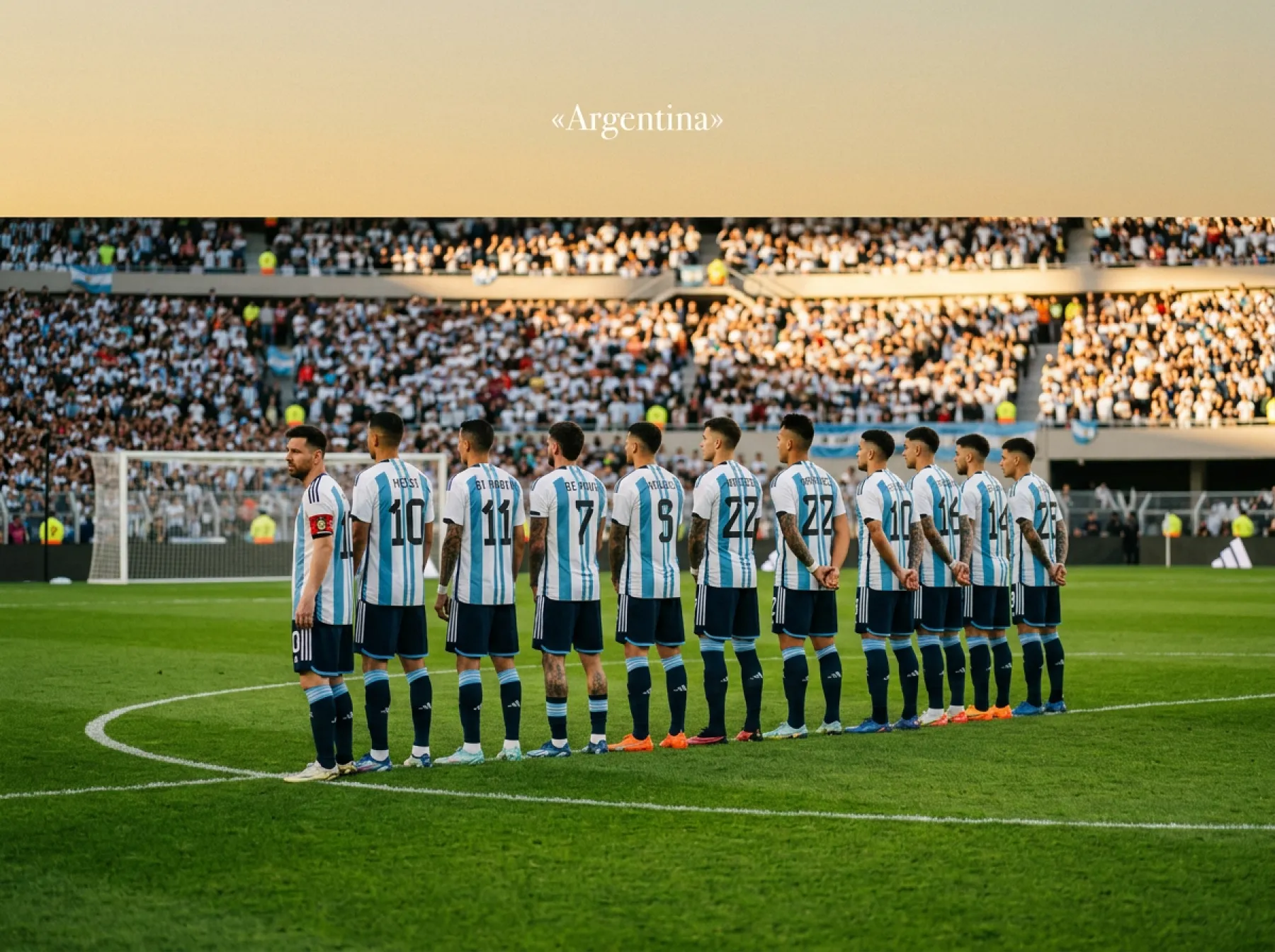
The image is seared into footballing memory: Lionel Messi lifting the trophy in Lusail, draped in a bisht, completing the only achievement that had eluded him across two decades of otherworldly brilliance. Argentina’s 2022 World Cup victory in Qatar settled a generational debate and gave the country its third star. Now the question that dominates every pre-tournament conversation — will Messi be in the squad for 2026? — hangs over Argentina’s defence like a storm cloud that could break either way. At 38, Messi’s legs have slowed but his football intelligence remains unmatched. Whether he leads the defence or watches from the stands, Argentina at the 2026 World Cup are a formidable proposition for any opponent and a fascinating puzzle for NZ punters trying to assess their odds.
Argentina’s Qualifying Campaign
South American qualifying treats nobody gently, not even the reigning world champions. Argentina’s CONMEBOL campaign was built on the defensive foundation that Lionel Scaloni established before Qatar — a compact 4-4-2 that transitions to a 4-3-3 in possession, anchored by a midfield that presses with intelligence rather than raw intensity. Argentina topped the CONMEBOL standings with 42 points from 18 matches, winning thirteen, drawing three and losing two. The two defeats — away to Uruguay and Colombia — came in hostile environments where altitude and atmosphere combined to level the playing field.
Messi featured in twelve of the eighteen qualifiers, missing six through a combination of rest, minor injuries and the logistical challenge of travelling from Inter Miami to South American venues mid-season. His presence on the pitch still transforms Argentina’s attacking play — his ability to find pockets of space between defensive lines and deliver final-third passes creates chances that no other player in the squad can manufacture. When Messi was absent, Argentina’s style shifted toward directness: long balls toward Julián Álvarez, crosses from wide areas, and set pieces as the primary creative outlet. The team won four of the six matches without Messi, demonstrating that Scaloni’s system functions independently of any single player — but the attacking quality dropped measurably. Argentina averaged 2.4 goals per match with Messi and 1.5 without him.
The qualifying campaign also revealed Argentina’s depth in midfield. Enzo Fernández (Chelsea) established himself as the primary ball-carrier, combining box-to-box running with progressive passing that links defence to attack. Alexis Mac Allister (Liverpool) provided the creative spark from the left side of a midfield three, arriving late in the box for goals and dictating tempo when Argentina controlled possession. Rodrigo De Paul’s experience and work rate remained essential in the pressing phase, even as his attacking output declined with age. The midfield trio of Fernández, Mac Allister and De Paul started together in fourteen of the eighteen qualifiers — continuity that breeds understanding and resilience under pressure. Behind them, Leandro Paredes offers a calmer alternative when Argentina need to control possession against aggressive pressing sides, and his long-range passing ability opens up direct routes to the forwards that bypass midfield congestion.
Argentina’s defensive record during qualifying — 14 goals conceded in 18 matches — was the best in CONMEBOL and reflected a team that prioritises structural solidity over individual heroics. Scaloni’s defensive organisation is systematic: the back four shifts as a unit, the midfield three compress spaces between the lines, and the wide forwards track back to create a compact 4-5-1 shape when under sustained pressure. That discipline costs energy, which is why squad rotation across the group stage will be critical — a luxury that Group J’s relatively low quality affords.
Key Players — Post-Messi Era or One More Dance?
Every conversation about Argentina at the 2026 World Cup starts and ends with one man. Messi’s situation at the time of writing remains officially unresolved — he has not announced international retirement, and Scaloni has publicly stated the door remains open. The betting market has reacted accordingly: Argentina’s outright odds shorten by approximately 15% whenever credible reports suggest Messi will be included in the squad. That volatility is itself a betting opportunity. If Messi confirms participation in late May 2026, the odds will tighten sharply, meaning early bets on Argentina with Messi priced in offer potential value.
Assuming Messi is not in the squad — the more likely scenario given his age, fitness record and the physical demands of a 39-day tournament in North American summer heat — Argentina’s attacking structure pivots to Julián Álvarez and Lautaro Martínez. Álvarez, now the undisputed starting centre-forward after his move from Manchester City to a leading European club, brings relentless pressing, intelligent movement and a finishing rate that improved dramatically across the 2025-26 season. His ability to drop deep, combine with midfielders and then sprint into the box for crosses makes him the perfect focal point for Scaloni’s system.
Lautaro Martínez (Inter Milan) operates as the secondary striker or left-sided forward, and his goal record at club level — exceeding 20 Serie A goals per season for three consecutive years — translates to international football with remarkable consistency. Lautaro scored eleven goals in CONMEBOL qualifying, the second-highest tally among all South American qualifiers. His movement in the penalty area, aerial ability and clinical finishing inside the six-yard box make him the primary goal threat in a post-Messi Argentina.
Defensively, Cristian Romero (Tottenham Hotspur) anchors the centre-back pairing with aggressive, front-foot defending that sets the tone for the entire team. His partnership with Lisandro Martínez (Manchester United) combines Romero’s physicality with Martínez’s composure on the ball and willingness to step into midfield with progressive carries. The pair have started together in twenty-three international matches, and their understanding — particularly in aerial duels and covering runs — is the most reliable centre-back partnership at the tournament. Nahuel Molina (Atlético Madrid) provides overlapping runs from right-back, and Nicolás Tagliafico holds down the left-back position with defensive discipline honed across years in La Liga and Ligue 1.
Emiliano Martínez remains in goal — the hero of the 2022 final penalty shootout — and his penalty-saving record, shot-stopping ability and psychological gamesmanship during shootouts give Argentina a genuine edge in knockout football. Dibu Martínez has saved penalties in three consecutive tournament shootouts, and his antics on the line — the delays, the verbal provocations, the sheer theatre of his approach — unsettle opponents in ways that measurably affect conversion rates. His influence on penalty outcomes alone is worth considering when assessing Argentina’s odds to progress through tight elimination matches. In open play, Martínez’s distribution has improved significantly since the 2022 World Cup, and his ability to launch counter-attacks with accurate long balls to Álvarez adds a dimension that bypasses midfield pressing entirely.
Group J — Algeria, Austria, Jordan
If you designed a group specifically to give defending champions an easy path to the Round of 32, it would look something like Group J. Argentina face Algeria, Austria and Jordan — three opponents who range from competitive (Austria) to limited at World Cup level (Jordan). The group is the softest draw Argentina could have hoped for, and their odds to finish first reflect that reality. But I have seen enough World Cups to know that “easy” groups produce upsets precisely because favourites underestimate them. Germany crashed out in the 2018 group stage against South Korea. Spain went home in 2014 after losing to Chile. Argentina themselves nearly exited in 2022 after losing to Saudi Arabia on matchday one.
Austria are the most dangerous opponent. Their pressing game, built around Ralf Rangnick’s high-intensity system, disrupted France and the Netherlands at Euro 2024 and could cause Argentina problems if Scaloni’s midfield fails to control the tempo in the first twenty minutes. Austria’s squad features several Bundesliga regulars — Marcel Sabitzer, Konrad Laimer and Christoph Baumgartner form a midfield trio that presses with relentless coordination — and a tactical identity that prioritises aggression over preservation, the opposite of what Argentina typically face in CONMEBOL qualifying. The Austria match on the final matchday could carry genuine tension if results elsewhere complicate the qualification picture, and Austria’s ambition to qualify for the knockout rounds for the first time in their World Cup history adds motivational fuel.
Algeria bring pace, physicality and a passionate support base that will create atmosphere in North American stadiums. Their squad draws heavily from Ligue 1 and the Algerian domestic league, and while the quality gap with Argentina is significant, Algeria’s directness and counter-attacking speed could trouble a high defensive line. The Algerian diaspora in North America is substantial, particularly in Montréal and the northeastern United States, meaning crowd support will not be one-sided. Jordan, making their World Cup debut after a historic AFC qualifying campaign that included a run to the 2024 Asian Cup final, are the least experienced side in the group but bring organisation and defensive discipline that belies their FIFA ranking. Jordan will likely approach all three matches with a deep defensive block designed to frustrate and counter. Argentina should beat Jordan comfortably, but the margin of victory matters for goal difference tiebreakers in scenarios where the top two positions are contested.
The scheduling works in Argentina’s favour. Their opening match against Algeria falls in a prime-time slot that guarantees a large crowd, and the energy of a World Cup opener will suit Argentina’s intensity. Playing Jordan on matchday two allows Scaloni to rotate key players before the Austria test on matchday three. For NZ punters, the Group J narrative is straightforward: back Argentina to win the group at short odds, and look for value in the margins — total goals, correct score markets and player props where the pricing is less efficient. Argentina to score three or more goals against Jordan prices around 2.10, and their attacking depth makes that a reasonable expectation against a debutant side.
Argentina Odds — Title Defence Pricing
Defending a World Cup title is statistically harder than winning it the first time. Since 1962, only two teams have successfully retained the trophy — Brazil in 1962 and Italy in 1938. The reasons are structural: the defending champion carries a target, opponents prepare specifically for their system, and the motivational edge that drove the previous victory is difficult to replicate. The market prices Argentina’s title defence at approximately 6.00-7.00, making them the second or third favourite alongside England and behind France. Those odds imply a 14-17% probability of winning seven consecutive matches across five weeks — a number that feels about right given the squad’s quality and Scaloni’s tactical acumen.
| Market | Odds | Implied Probability |
|---|---|---|
| Outright winner | 6.50 | 15.4% |
| Group J winner | 1.22 | 82.0% |
| To reach semi-finals | 2.50 | 40.0% |
| To reach final | 4.00 | 25.0% |
Group J winner at 1.22 is dead money for most punters — the return is negligible relative to the stake, even though the probability is high. The value sits further down the tournament path. Argentina to reach the semi-finals at 2.50 is the line I find most attractive: their group is soft, the Round of 32 opponent will be a third-placed team, and the Round of 16 likely pits them against a Group I or K contender. The path to the semis is navigable without facing a top-four rival, and 2.50 offers a genuine edge over the implied probability.
The Messi factor complicates outright pricing. If confirmed in the squad, Argentina’s outright odds will shorten to approximately 5.00-5.50, reflecting the market’s belief that Messi’s presence adds a measurable advantage in close knockout matches. Whether that belief is justified for a 38-year-old playing in North American summer temperatures is debatable, but the market will move regardless. Punters who believe Messi will play should lock in current odds before any announcement. Conversely, if Messi confirms retirement from international football, the odds may drift to 7.50-8.00 — creating a potential value window for those who believe the squad’s collective quality compensates for one player’s absence.
Player markets offer interesting angles. Álvarez to finish as tournament top scorer prices around 12.00-15.00, and his expected minutes (likely to start all group matches plus knockout games) give him the volume of opportunities needed to challenge. Lautaro as anytime goalscorer per group match prices around 2.40, and his conversion rate in the penalty area — above 30% across the last two seasons at Inter — supports that pricing. In the assist markets, Mac Allister at 4.00 per match represents fair value given his role as the primary creative outlet in Scaloni’s system, though much depends on whether Messi’s presence alters the distribution of creative responsibilities.
Scaloni’s System
Lionel Scaloni took charge of Argentina in 2018 as a relative unknown — a former assistant with no head coaching experience at club level. Six years later, he has won a World Cup, two Copa Américas and built one of the most tactically disciplined international sides in the sport. His Argentina play a 4-3-3 in possession that compresses to a 4-4-2 mid-block without the ball, with the wide forwards tucking inside to overload the central channel and the fullbacks providing width. The system demands collective pressing discipline, with triggers based on the opponent’s body position rather than ball location — a detail that separates Scaloni’s press from cruder versions that simply chase the ball.
The midfield is the system’s engine. Fernández sits deepest, recycling possession and breaking up opposition attacks with tackles and interceptions. Mac Allister operates on the left of the three, drifting into half-spaces to receive between lines and create numerical advantages. De Paul (or his replacement, potentially Giovani Lo Celso) occupies the right-side role, combining defensive work rate with late runs into the box. The balance between the three midfield roles is Scaloni’s masterpiece — each player’s strengths complement the others’ weaknesses, creating a unit that controls matches against both defensive and attacking opponents.
In knockout football, Scaloni’s pragmatism shines. He is willing to sit deep, absorb pressure and win on counter-attacks or penalties — a willingness that many elite managers resist. The 2022 final, in which Argentina surrendered a two-goal lead against France before winning on penalties, demonstrated Scaloni’s ability to manage chaos. That composure on the touchline translates to the squad’s behaviour in high-pressure moments, and it is a genuine competitive advantage that the odds may undervalue. Scaloni also adapts his system to opponents — he used a 5-3-2 against the Netherlands in the 2022 quarter-final, a 4-4-2 diamond against Croatia in the semi-final, and reverted to 4-3-3 for the final. That tactical flexibility, rare among international managers constrained by limited preparation time, gives Argentina options that most opponents lack. For punters, the implication is clear: Argentina are unlikely to be tactically outmanoeuvred in any single match, which reduces the probability of shock elimination in the knockout rounds.
Three Stars on the Shirt — History
Argentina’s three World Cup victories — 1978, 1986, 2022 — each carry distinct emotional weight. The 1978 tournament on home soil was controversy-laden and politically charged, held during the military dictatorship that used the competition as propaganda. The 1986 triumph belonged to Diego Maradona, whose individual brilliance produced both the Hand of God and the Goal of the Century in the same match against England. The 2022 victory in Qatar was Messi’s coronation, a narrative so powerful that it transcended football and became a global cultural moment.
Between those peaks, Argentina endured valleys that tested the nation’s footballing identity. Three consecutive finals without a trophy — 1990 World Cup, 2014 World Cup, 2015 and 2016 Copa América — defined a decade of agonising near-misses. The 2014 final against Germany in Rio de Janeiro was particularly cruel: Argentina controlled possession for long stretches, Messi hit the post, and Mario Götze’s extra-time goal sealed a defeat that seemed to confirm a curse. The 2022 triumph released decades of accumulated pressure, and the current squad enters 2026 with a psychological freedom that previous Argentine teams lacked. They have already won the biggest prize. The 2026 campaign is an opportunity to cement a legacy rather than create one, and that distinction matters in tournament football where mental resilience often determines outcomes. Players who have already experienced the highest high — lifting the World Cup — approach pressure situations differently from those chasing a first title. That experience is embedded in at least fifteen members of the current squad, and it gives Argentina an intangible edge that no statistical model can fully capture.
For NZ punters, Argentina’s Group J campaign is a banker segment in multi-bet constructions. Argentina winning all three group matches prices around 2.20 as a treble, and their record in soft groups — nine points from three matches in every World Cup group stage since 2014 (excluding the Saudi Arabia anomaly) — supports the pattern. The risk is complacency, the reward is a reliable leg in an accumulator. For the broader tournament, Argentina are one of the few teams where backing them to reach at least the quarter-finals feels like a confident play rather than a speculative one.